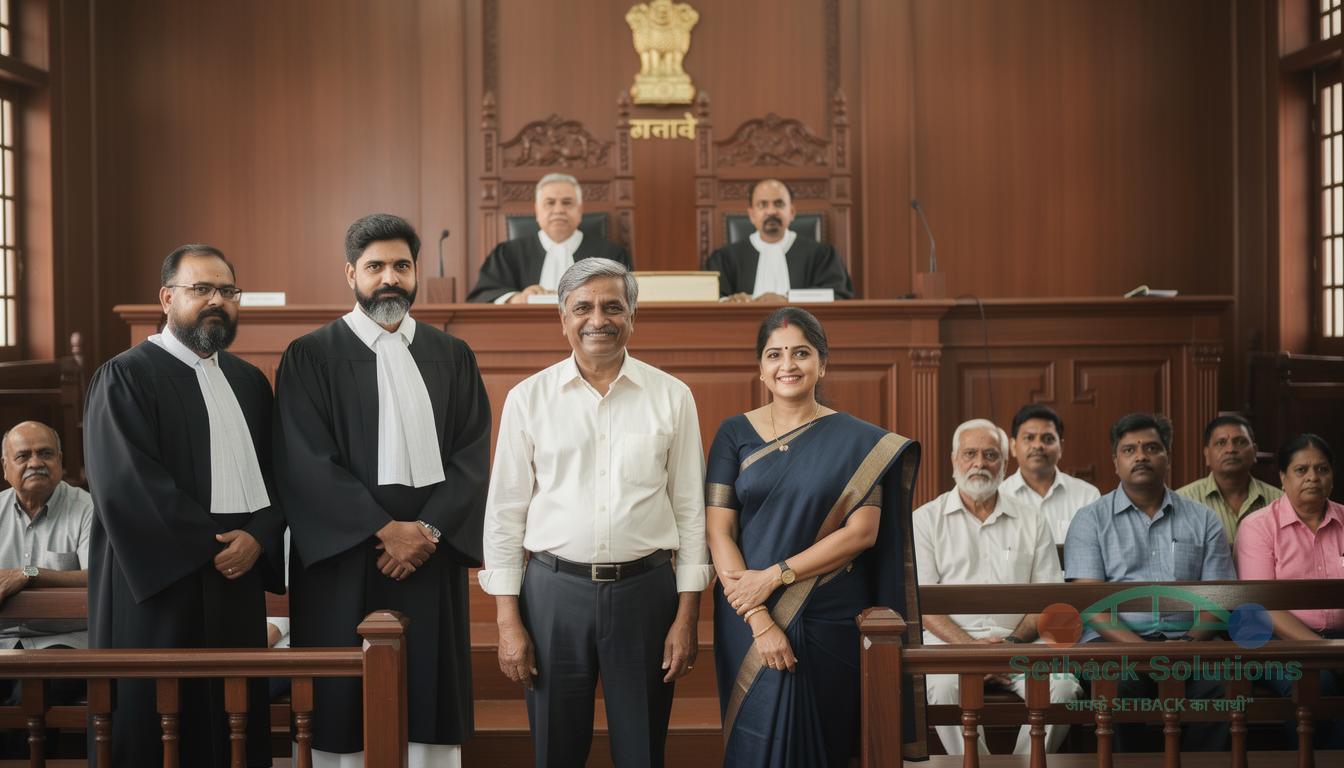
Ruled in favour of M.K. Venu and other Applicants (Respondents)
In Short
The Kerala State Waqf Board challenged a tribunal's decision allowing ordinary citizens to send written questions to the Board in an ongoing property dispute. The High Court reviewed multiple appeals regarding these written questions and handled the matters together. The core of the case dealt with whether the tribunal properly allowed these written inquiries under civil rules.
The Parties
Party A: The Kerala State Waqf Board (Appellant)
Party B: M.K. Venu, Princy Joseph, Antoney V.L., Sebastian Joseph, and other connected respondents and applicants
Advocates & Judges
For Party A: Learned Advocate Mr. Jamsheed Hafiz
For Party B: Learned Advocate Mr. Jamsheed Hafiz, Learned Advocate Smt. Nisha George, Learned Advocate Mr. Anas V., Learned Advocate Mr. Kalam Pasha B., Learned Advocate Smt. S. Parvathi, Learned Advocate Mr. George Poonthottam (Sr.), Learned Advocate Smt. T.K. Sreekala, Learned Advocate Smt. Nikitha Susan Paulson, Learned Advocate Smt. Uthara Asokan, Learned Advocate Smt. Krishnendu S.R., Learned Advocate Smt. Vishakha J., Learned Advocate Smt. Hasna Ashraf T.A., Learned Advocate Mr. Mandu Antoney, Learned Advocate Mr. C.C. Anoop, Learned Advocate Mr. K. Shahzad, Learned Advocate Mr. Anandu U.R., Learned Advocate Mr. Hamdan Mansoor K., Learned Advocate Mr. T.U. Sujith Kumar, Learned Advocate Sarun Rajan, Learned Advocate Smt. Lakshmi Sreedhar
Judge(s): Hon'ble Justice Anil K. Narendran, Hon'ble Justice Muralee Krishna S.
What the Case Was About
This matter reached the High Court because various individuals had filed original applications before the Waqf Tribunal in Kozhikode challenging an older order passed by the Kerala State Waqf Board. During those tribunal proceedings, the applicants asked the tribunal for formal permission to deliver written questions to the Waqf Board to get clear facts. The tribunal allowed this request. Unhappy with that permission, the Waqf Board filed appeals in the High Court to stop those written questions from being answered.
Judgment Date
6 October 2026
The Outcome
The court handled multiple connected appeals together, treating MFA (Waqf) No. 13 of 2026 as the leading case, stemming from the tribunal orders issued on 20 December 2025.
What the Court Looked At
- The appeals were filed under the Waqf Act against orders passed by the Waqf Tribunal in Kozhikode.
- The underlying applications challenged a specific order issued by the State Waqf Board dating back to May 2019.
- The applicants had invoked civil procedural rules to seek leave of the tribunal to deliver written interrogatories to the Waqf Board.
- The tribunal had allowed the interlocutory applications permitting these written questions to be delivered to the 1st respondent Board.
What This Means For You
When ordinary people get into disputes with powerful state boards or official institutions over property, they often feel completely powerless against missing records and silence. This case shows that legal procedures allow applicants to formally put written questions to official bodies through a tribunal to extract necessary answers. If you find yourself facing an official authority in a property or administrative dispute, remember that procedural rules exist to demand transparency and accountability. Setback Solutions can help you understand your options and coordinate next steps when dealing with complex official disputes.
You Still Have Options
If you are facing a difficult property dispute, stuck against an official board, or wondering how to challenge an unfavorable order, do not assume you are out of options. You can still explore alternative viewpoints, review your procedural steps, or seek non-judicial guidance to figure out your next move. Reach out to Setback Solutions to help you understand your choices and coordinate the way forward. Setback Solutions is not a law firm and does not give legal advice or guarantee any results, but offers plain-language help and coordination only.