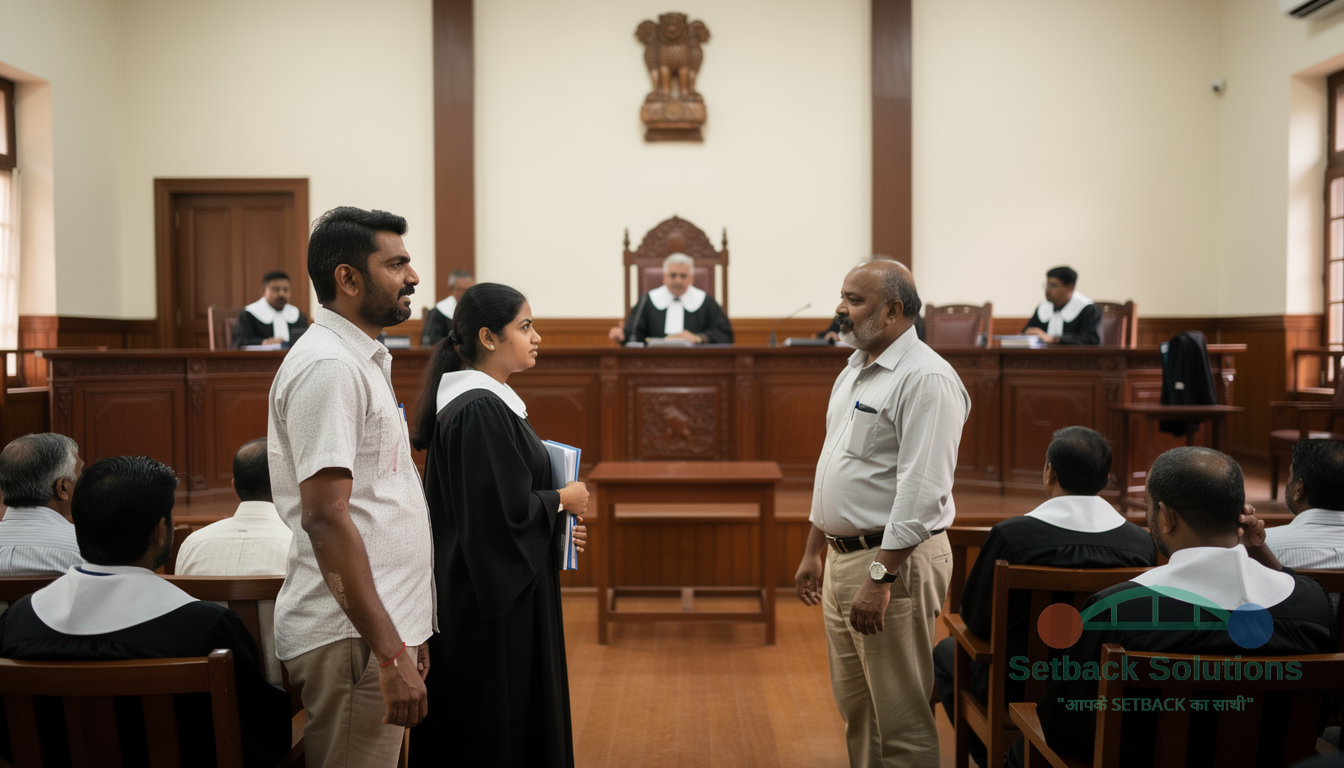
Ruled in favour of Faizal Y (Applicant / 1st Respondent)
In Short
A tile worker suffered permanent disability after his employer's motorcycle crashed while traveling between work sites. The Employees Compensation Commissioner ordered the insurance company to pay over four lakh rupees in compensation, prompting the insurer to file an appeal. The Kerala High Court dismissed the appeal, ruling that the employer-employee relationship was proven and the insurer was legally bound to pay.
The Parties
Party A: Faizal Y
Party B: United India Insurance Company Limited and Mohammed Shafeek
Advocates & Judges
For Party A: Learned Advocate Ms. M. Santhi
For Party B: Learned Advocate Mr. John Joseph Vettikad
Judge(s): Hon'ble Justice S. Manu
What the Case Was About
A 34-year-old tile worker named Faizal was riding a motorcycle with his employer, a tiles contractor named Mohammed Shafeek, traveling from one work site to another. Their bike collided with another motorcycle, causing Faizal to suffer severe injuries and a 50 percent permanent disability. Faizal filed a claim for compensation under the Employees' Compensation Act. While the employer admitted that Faizal worked for him and that the accident happened during work hours, the insurance company contested the claim. The insurer argued there was no real proof of employment, claimed collusion between the worker and the employer, and pointed to an exclusion clause in the insurance policy to argue it had no liability to pay. The lower compensation authority ruled in favor of the worker, leading the insurance company to take the matter to the High Court.
Judgment Date
1 October 2026
The Outcome
The Kerala High Court dismissed the insurance company's appeal and upheld the compensation order granted by the lower authority. The court held that the factual findings of the lower authority were sound and that the insurance company could not use policy exclusion clauses to escape its legal obligation to pay.
What the Court Looked At
- The court noted that the employer clearly admitted in his written statement that Faizal was his employee and that the accident occurred during work.
- The court observed that an eyewitness confirmed both men were traveling together on the motorcycle between work sites at the time of the crash.
- The court highlighted that under the relevant legal framework, an appellate court has very limited power to re-examine pure facts unless the lower authority's findings are completely perverse.
- The court rejected the insurance company's reliance on a policy exclusion clause, noting that previous court rulings establish that such exclusions cannot override statutory liabilities toward employees.
"Unless the conclusions recorded by the Commissioner are perverse for various reasons, this Court cannot vacate a factual conclusion recorded by the Commissioner and substitute it."
What This Means For You
This case shows that when an employer openly admits an employment relationship and eyewitness testimony supports how an accident happened during work duties, insurance companies face a steep hurdle trying to dismiss claims. If you are a worker injured while moving between job sites, getting clear statements from your employer and independent witnesses is vital to safeguarding your right to compensation. Dealing with insurance disputes and unexpected legal appeals can feel overwhelming, but Setback Solutions is here to help you understand your options and coordinate your next steps without any legal jargon or stress.
You Still Have Options
If you are currently facing an insurance dispute, struggling with a rejected accident claim, or wondering what to do after an unfavorable lower court ruling, please know that this is not the end of the road. You can still explore alternative pathways such as seeking a second opinion, reviewing your case file, or obtaining non-judicial guidance to plan your next moves. Setback Solutions is here to help you understand your options and coordinate your next steps clearly and simply. Please note that Setback Solutions is not a law firm, does not provide legal advice, and does not guarantee any specific court outcome.