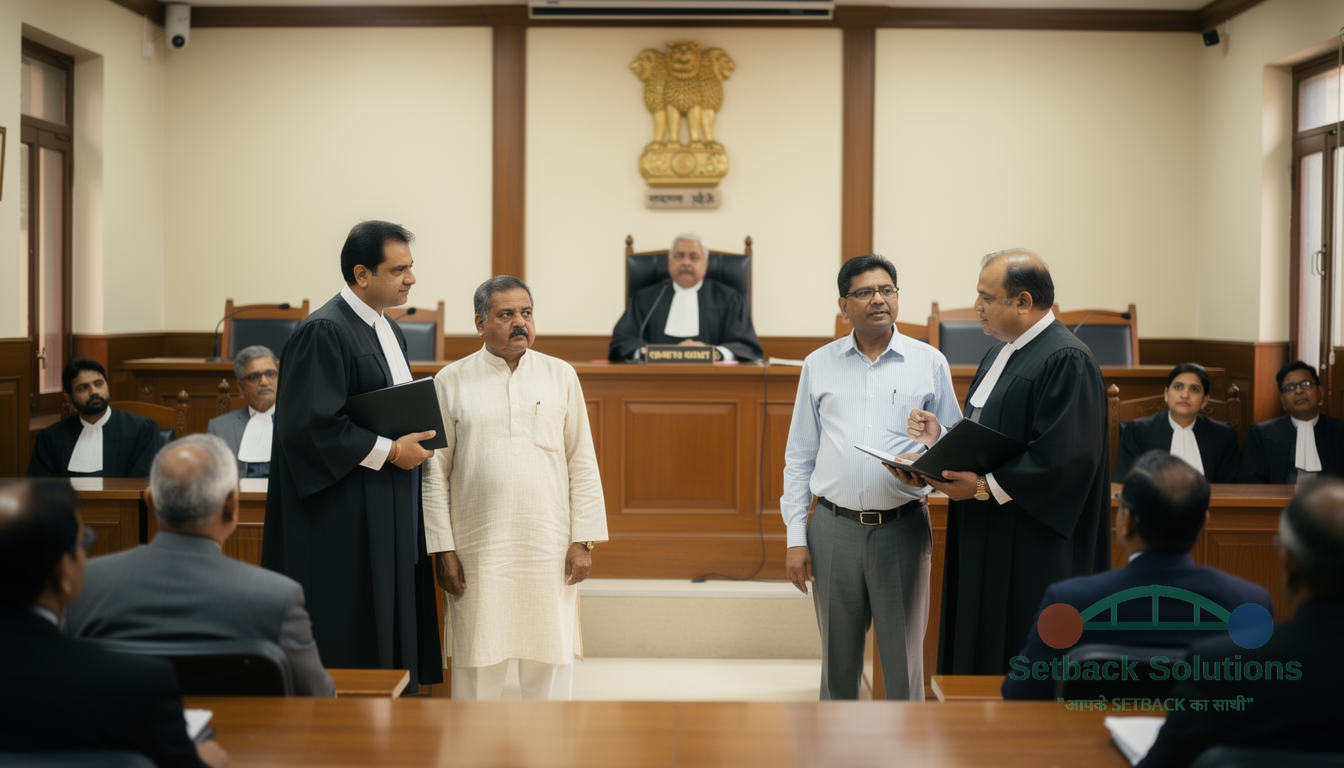
Appeal dismissed — ruling against Babu Lal (Petitioner)
In Short
A tenant tried to stop his eviction from a shop in Chandni Chowk by arguing that the landlord did not truly own the shop and that other properties were available. The Delhi High Court ruled that higher courts cannot re-open and re-examine every single fact like a trial court, and refused to interfere with the lower court's eviction order.
The Parties
Party A: Babu Lal
Party B: Neelam Kumar Modi
Advocates & Judges
For Party A: Learned Advocate Mr. Pratyush Chirantan, Learned Advocate Mr. Abhishek Bajpai
For Party B: Learned Advocate Mr. Akhil Mittal, Learned Advocate Mr. Sunil Mittal, Learned Advocate Mr. Vineet Kumar Mishra, Learned Advocate Ms. Shayna Dass Pattnayak, Learned Advocate Ms. Riddhi Jain
Judge(s): Hon'ble Justice Harish Vaidyanathan Shankar
What the Case Was About
An elderly landlord filed a petition to evict a tenant from a ground floor shop in Chandni Chowk to help his grandson start a diamond and jewellery business. The tenant fought back by claiming the landlord did not own the shop, arguing that the site plans did not match, denying that rent receipts belonged to him, and stating the landlord had plenty of other empty properties. The lower rent controller rejected the tenant's defense and ordered him to vacate. The tenant then brought the dispute to the Delhi High Court through a revision petition.
Judgment Date
27 October, 2026
The Outcome
The Delhi High Court dismissed the tenant's revision petition, upholding the lower court's order and confirming that the eviction must proceed.
What the Court Looked At
- The High Court noted that its role is strictly supervisory and limited to checking for legal errors, not re-analyzing evidence like an appeals court.
- The court observed that the tenant's arguments regarding differing site plans, rent receipt signatures, and alternative properties had already been reviewed by the lower authority.
- The court highlighted supreme court rulings stating that higher courts must not conduct a roving inquiry into rent disputes unless there is a glaring legal flaw.
- The court found no perversity, material irregularity, or jurisdictional error in the lower court's decision to deny the tenant permission to defend the eviction.
What This Means For You
If you are a tenant facing an eviction suit based on a landlord's genuine business need, simply raising minor doubts about floor plans or rent receipts may not be enough to save you if a lower court has already evaluated the facts and found them lacking. Higher courts will not step in just because you want them to look at the evidence all over again; they only check if the lower court followed proper legal procedures. Understanding how limited your options are at the revision stage can save you from spending time and money on challenges that do not address actual legal errors. Setback Solutions can help you understand these procedural boundaries and coordinate your next steps with clear, plain-language guidance.
You Still Have Options
If you are facing an eviction order, caught in a commercial property dispute, or wondering whether your revision petition has a solid legal basis, it can feel overwhelming and uncertain. You do not have to navigate these complex procedural hurdles alone, as exploring a second opinion or seeking non-judicial guidance can help clarify your path forward. Reach out to Setback Solutions for help understanding your options and coordinating your next steps in plain, simple language.