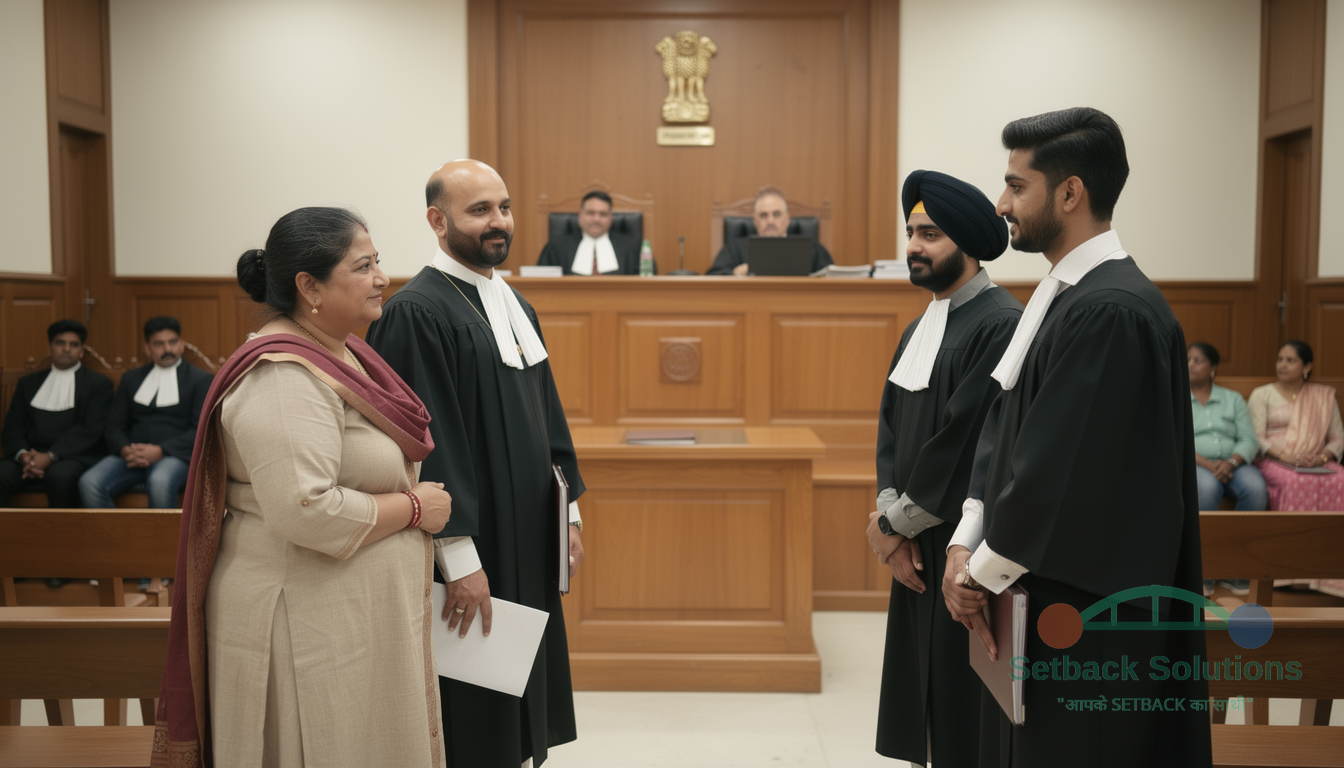
Ruled in favour of Madhu Aggarwal (Petitioner)
In Short
This case was about tax authorities trying to collect unpaid goods and services tax from a person who had already passed away years earlier. The High Court found that the tax department made a major mistake by issuing formal notices and orders directly in the name of a dead person rather than giving proper notice to their living legal representative. The court cancelled the flawed tax orders so the department can start over properly against the right person.
The Parties
Party A: Madhu Aggarwal, Legal Representative of Late Sh Ramphal Aggarwal
Party B: Union of India and Others
Advocates & Judges
For Party A: Learned Advocate Mr. Ankit Grewal
For Party B: Learned Advocate Mr. Naman Jain
Judge(s): Hon'ble Chief Justice Ashwani Kumar Mishra and Hon'ble Justice Rohit Kapoor
What the Case Was About
Late Ramphal Aggarwal had previously operated a business and held a tax registration that was cancelled in April 2020 before he passed away in May 2021. Years later, in August 2024, the tax department issued official notices demanding tax payments for the 2017-2018 financial year. Instead of issuing these notices to the family members who inherited the estate, the department mistakenly sent them in the name of the deceased businessman himself and carried on the proceedings against a dead person. When the family challenged these unfair orders up to the High Court, the judges stepped in to fix the procedural mistake.
Judgment Date
22.09.2026
The Outcome
The court ruled in favour of the petitioner and quashed the illegal tax orders passed against the deceased person. The judges made it clear that while the tax department can still try to collect dues from a deceased person's property, they must follow proper legal steps by naming and notifying the actual living heirs.
What the Court Looked At
- The court noted that the person holding the tax registration died on May 23, 2021.
- The judges observed that the official tax notices and final orders were issued directly against a dead person.
- The court accepted that while tax authorities can recover dues from a deceased person's estate, the living legal representative must be officially made a party to the case.
- The judges pointed out that the petitioner was never given a proper and fair opportunity of hearing in an individual capacity.
- The court ruled that skipping this essential step broke basic rules of fairness, making normal appeal remedies useless.
- > "In order to pass a valid order in this regard, the person who has inherited the estate of the deceased and from whom the recovery is now proposed to be made has to be arrayed as a party."
What This Means For You
Getting hit with tax notices or legal demands addressed to a family member who has passed away can cause instant panic and confusion. In this case, the family got into trouble because the tax department tried to bypass basic rules and hold a dead person responsible instead of notifying the living heir properly. The vital takeaway is that tax authorities cannot simply ignore a person's death and issue orders against a ghost; they must officially involve the legal heir and give them a fair chance to respond. If you are dealing with official notices meant for someone who is no longer alive, do not assume the problem vanishes on its own, but also know that you have the right to demand proper legal procedures. Setback Solutions can help you understand your options and coordinate next steps so you never have to navigate complicated tax notices alone.
You Still Have Options
Dealing with unexpected tax demands or facing unfair orders after a loved one passes away can leave you feeling completely overwhelmed and unsure of what to do next. If you are facing a wrongful tax notice or worried about estate liabilities, please remember this is not the end of the road. You can still explore options such as getting a second opinion, evaluating your administrative remedies, or seeking non-judicial guidance on how to respond correctly. Reach out to Setback Solutions for help understanding your options and coordinating the next step. Setback Solutions is not a law firm and does not give legal advice or guarantee any result, but we are here to provide plain-language help and coordination when you need it most.