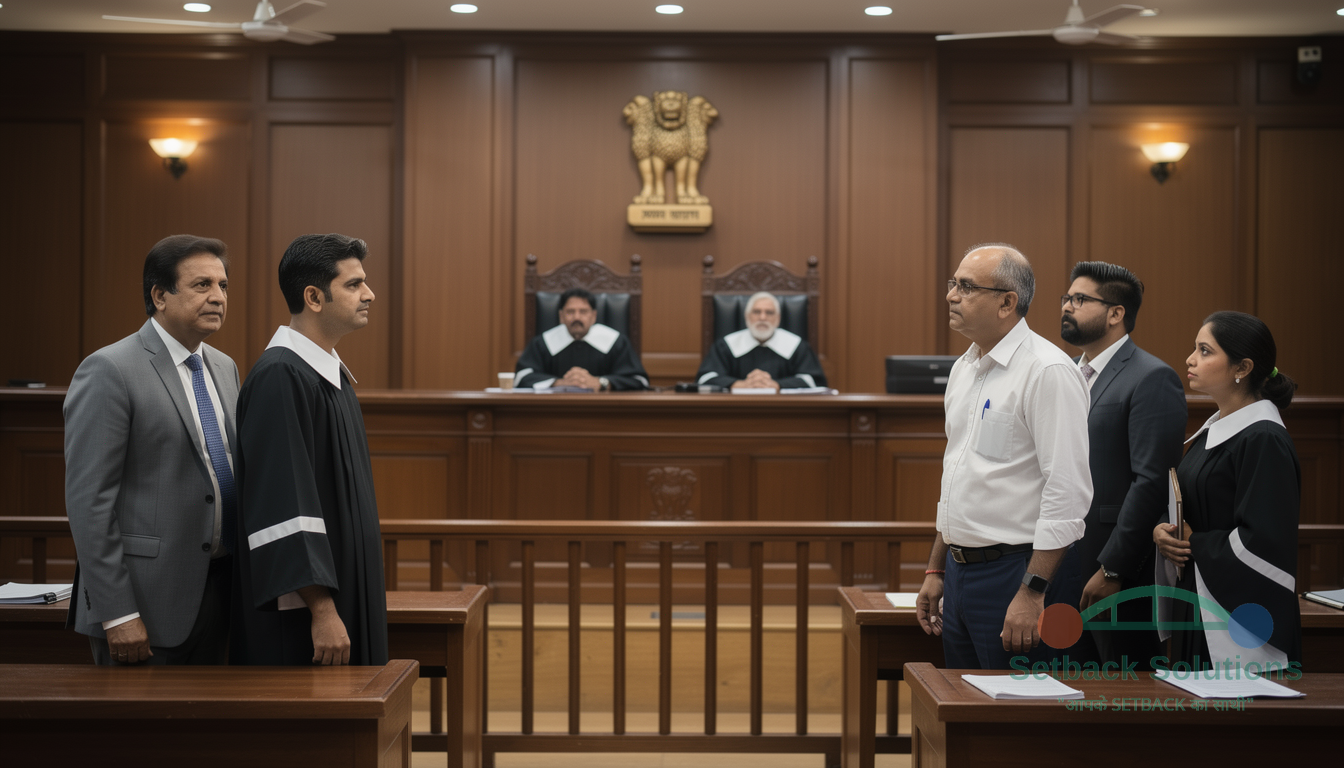
Ruled in favour of Treco Wire India Private Limited (Petitioner)
In Short
A manufacturing company was hit with a massive tax demand of over 3.3 crore rupees plus heavy penalties because the tax department claimed it claimed tax credits from suppliers whose registrations were later cancelled. The Delhi High Court quashed the tax order because the authorities failed to give basic details like invoice dates or prove any fraud, though it upheld the rule that companies cannot challenge the constitutionality of the main tax credit laws.
The Parties
Party A: Treco Wire India Private Limited
Party B: Additional Commissioner Central Tax Delhi North & Ors.
Advocates & Judges
For Party A: Learned Advocate Mr. Abhishek Garg
For Party B: Learned Advocate Mr. Aditya Singla, Learned Advocate Ms. Arya, Learned Advocate Mr. Dhananjay Gautam, Learned Advocate Mr. Akhil Sharma, Learned Advocate Ms. Sakshi Chandna, Learned Advocate Ms. Nehaol
Judge(s): Hon'ble Justice Anil Kshetarpal, Hon'ble Justice Bharat Parashar
What the Case Was About
The Petitioner company makes copper wires and went through a tax audit covering the years 2017 to 2021. The tax department objected to millions of rupees in tax credits claimed by the company, alleging they came from suppliers whose GST registrations were cancelled with retrospective effect, plus delayed payments past 180 days. After a show-cause notice and an order confirming a multi-crore tax and penalty demand under strict fraud provisions, the company approached the High Court arguing that the tax order was legally blind and lacked basic factual details.
Judgment Date
29.09.2026
The Outcome
The court ruled in favour of the Petitioner regarding the flawed tax adjudication order and set it aside, while dismissing the challenge to the constitutional validity of the tax credit provision.
What the Court Looked At
- The court examined the challenge to Section 16(c) of the CGST Act and noted that the Supreme Court already upheld its validity in a similar case.
- The court noted that Section 74 of the CGST Act requires clear proof of fraud, wilful misstatement, or suppression of facts before heavy penalties can be applied.
- The court observed that the tax authority's order failed to disclose the names of the suppliers, the dates of the invoices, or the dates when supplier registrations were cancelled.
- The court pointed out that during the hearing, the department's lawyer could not even confirm if the case involved a specific entity named Balaji.
"The mere reproduction of the statutory language, without particulars supporting such satisfaction, would not, by itself, demonstrate the application of mind necessary to sustain an order under Section 74 ."
What This Means For You
When tax authorities issue a high-stakes notice accusing your business of fraud or wrong tax credits, they cannot simply copy-paste legal words without showing hard evidence. In this case, the company got relief because the tax office failed to list basic facts like invoice dates, specific supplier names, and proof of wrongdoing before demanding massive penalties. If you receive a vague tax demand that throws around heavy accusations without backing them up with concrete proof, do not assume you have no defense. Setback Solutions can help you understand your options and coordinate next steps in plain, simple language.
You Still Have Options
Facing a confusing tax notice, a sudden multi-crore demand, or wondering what to do after a flawed adjudication order can feel overwhelming. It is definitely not the end of the road, and you can still look into getting a second opinion, evaluating your current legal strategy, or seeking non-judicial guidance. Reach out to Setback Solutions for help understanding your options and coordinating the next step. Setback Solutions is not a law firm and does not give legal advice or guarantee any result; we only provide plain-language help and coordination.