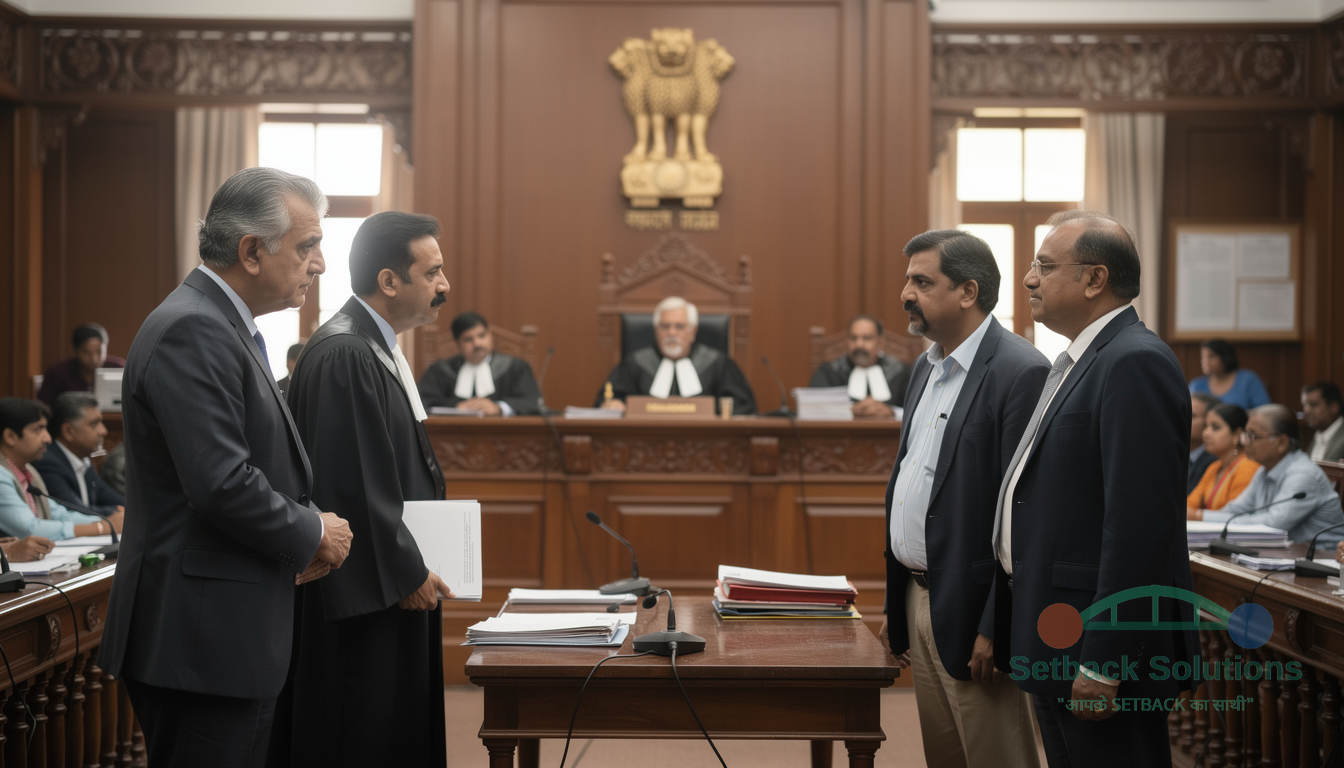
Appeal dismissed — ruling against Munjee Nathoobhoy & Company Pvt. Ltd. and Others (Petitioners)
In Short
Three group companies had occupied office space in a historic Mumbai building owned by the Reserve Bank of India for decades. The RBI sought their eviction citing security threats and its own need for the space, leading lower authorities to order their removal. The Bombay High Court reviewed the matter to decide if the eviction orders and security concerns were valid.
The Parties
Party A: Munjee Nathoobhoy & Company Pvt. Ltd., Reunion Private Limited, and Reunion Engineering Company Private Limited
Party B: Reserve Bank of India and The Estate Officer, Reserve Bank of India
Advocates & Judges
For Party A: Learned Advocate Mr. P.S. Colabawala, Learned Advocate Mr. Samkit Shah, and Learned Advocate Mr. Farhad Vakil
For Party B: Learned Advocate Mr. Virendra Tulzapurkar, Learned Advocate Mr. Parag Sharma, Learned Advocate Ms. Aditi Pathak, Learned Advocate Ms. Megha More, Learned Advocate Ms. Twinkle Kalla, and Learned Advocate Ms. Juhi Bhayani
Judge(s): Hon'ble Justice Sandeep V. Marne
What the Case Was About
Three related companies rented and occupied a portion of the fourth floor in Amar Building, a structure located in the Fort area of Mumbai that was constructed back in 1930. The Reserve Bank of India later purchased the building in 1947 and became its owner. Over the decades, disputes arose between the bank and the corporate tenants regarding the continued occupation of the premises. In 2009, the RBI issued termination notices and started eviction proceedings before an Estate Officer, arguing that security reports from 2002 and 2005 pointed to serious security risks and that the bank genuinely needed the space for its own use. The Estate Officer ordered the tenants to vacate the premises, and a lower appellate court upheld that decision. The tenants then approached the High Court to challenge their eviction.
Judgment Date
26 October 2026
The Outcome
The court dismissed the petitions filed by the tenant companies and upheld the lower decisions ordering their eviction from the public premises.
What the Court Looked At
- Considered the historical tenancy of the three group companies inside the RBI-owned Amar Building since the mid-twentieth century.
- Examined the validity of the 2009 eviction notices issued under public premises laws following security assessments.
- Reviewed arguments regarding whether security reports from 2002 and 2005 were stale or improperly admitted into evidence during the hearings.
- Analyzed whether the RBI as a public body acted arbitrarily or showed a genuine requirement for the space based on security grounds.
What This Means For You
Occupying a commercial property for many decades does not grant permanent immunity from eviction if the landlord is a public institution with documented security needs. Renters in buildings owned by government bodies or banks must recognize that security assessments and public necessity can override long-standing private tenancies. If you are a tenant facing sudden eviction notices based on safety or institutional requirements, ignoring the institutional backing of public premises laws can leave you with very few defenses. Setback Solutions can help you understand your options and coordinate next steps when facing complex landlord disputes.
You Still Have Options
Dealing with a sudden eviction notice or a lost property case can feel completely overwhelming, especially when fighting a powerful institutional landlord. You might be thinking "facing a corporate eviction notice" or "lost my case in the lower court, what now" and wondering where to turn next. This is definitely not the end of the road, as you can still explore a second opinion, review your case records, or seek non-judicial guidance on your next moves. Reach out to Setback Solutions for plain-language help and coordination to understand your options moving forward.