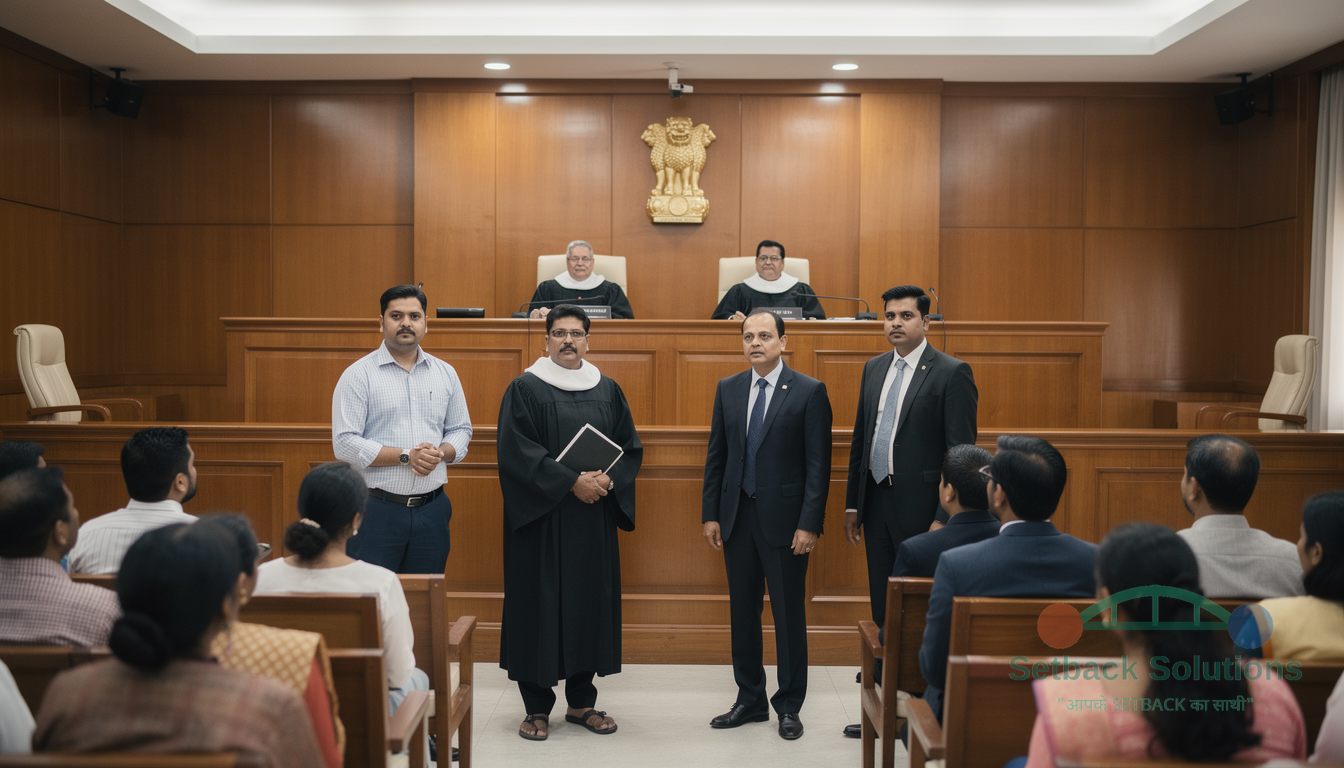
Appeal dismissed — ruling against Nikhil Poddar (Petitioner)
In Short
Nikhil Poddar tried to submit his defense statement in a bank loan recovery case long after the legal deadline had passed. The Debt Recovery Appellate Tribunal refused to accept it, and the Delhi High Court agreed, ruling that courts have no power to excuse delays beyond the maximum 45-day limit set by law.
The Parties
Party A: Nikhil Poddar (represented through his constituted attorney Mr. Devender Kumar Sharma)
Party B: Punjab National Bank
Advocates & Judges
For Party A: Appearance not given
For Party B: Learned Advocate Mr. Brijesh K Tamber, Learned Advocate Ms. Chanchala Kumari, Learned Advocate Mr. Vinay Singh Bist
Judge(s): Hon'ble Justice Subramonium Prasad, Hon'ble Justice Renu Bhatnagar
What the Case Was About
Nikhil Poddar was facing a loan recovery case brought by Punjab National Bank before debt recovery authorities. Under the law governing debt recovery tribunals, a defendant has thirty days from receiving the summons to file a written statement defending themselves, with a possible fifteen-day grace period in exceptional circumstances—making forty-five days the absolute maximum limit. Although Poddar's legal team received the case documents on September 6, 2019, his written defense was not filed until November 26, 2019, which far exceeded the 45-day cutoff. When the appellate tribunal refused to accept the delayed filing, Poddar challenged that decision in the High Court.
Judgment Date
23rd SEPTEMBER, 2026
The Outcome
The Delhi High Court dismissed the writ petition, confirming that the tribunal was correct to reject the delayed defense statement because the law does not allow any extensions beyond the 45-day limit.
What the Court Looked At
- The court noted that Poddar received the case paper-book on September 6, 2019, making his standard 30-day deadline October 6, 2019.
- The court observed that the statutory grace period extended the absolute deadline to September 21, 2019, under exceptional circumstances.
- The court highlighted that Poddar actually filed his written statement on November 26, 2019, well beyond the maximum allowed timeframe.
- The court evaluated whether general limitation laws could apply to excuse the delay, concluding that the debt recovery legislation is a special code that excludes such relief.
- The court relied on previous Supreme Court rulings involving similar strict deadlines in consumer protection and arbitration laws to emphasize that legislative time limits must be strictly followed.
"For having speedy trial, this legislative mandate of not giving more than 45 days in submitting the written statement or the version of the case is required to be adhered to."
What This Means For You
Strict court deadlines are not mere suggestions that can be ignored without serious consequences. In this case, waiting too long to file a written statement meant the borrower lost the right to present a defense altogether, effectively handing an advantage to the bank. If you are ever involved in a financial dispute or loan recovery proceeding, you must act immediately upon receiving legal notices and ensure your paperwork is filed well within the statutory timeline. Missing these tight windows can shut the courthouse door on your arguments before a judge even looks at them. Understanding how strict these timelines are can help you coordinate your next steps carefully with professional guidance from Setback Solutions.
You Still Have Options
Finding out that your defense was rejected because of a missed deadline can feel overwhelming and stressful. Whether you are facing a strict tribunal timeline, lost your case due to a procedural delay, or are wondering what your options are after an unfavorable ruling, it is not the end of the road. You can still explore alternative paths such as seeking a second opinion, evaluating your current legal representation, or obtaining non-judicial guidance to understand where you stand. Reach out to Setback Solutions for plain-language help and coordination to figure out your options moving forward. Please note that Setback Solutions is not a law firm and does not provide legal advice or guarantee any specific legal outcome.