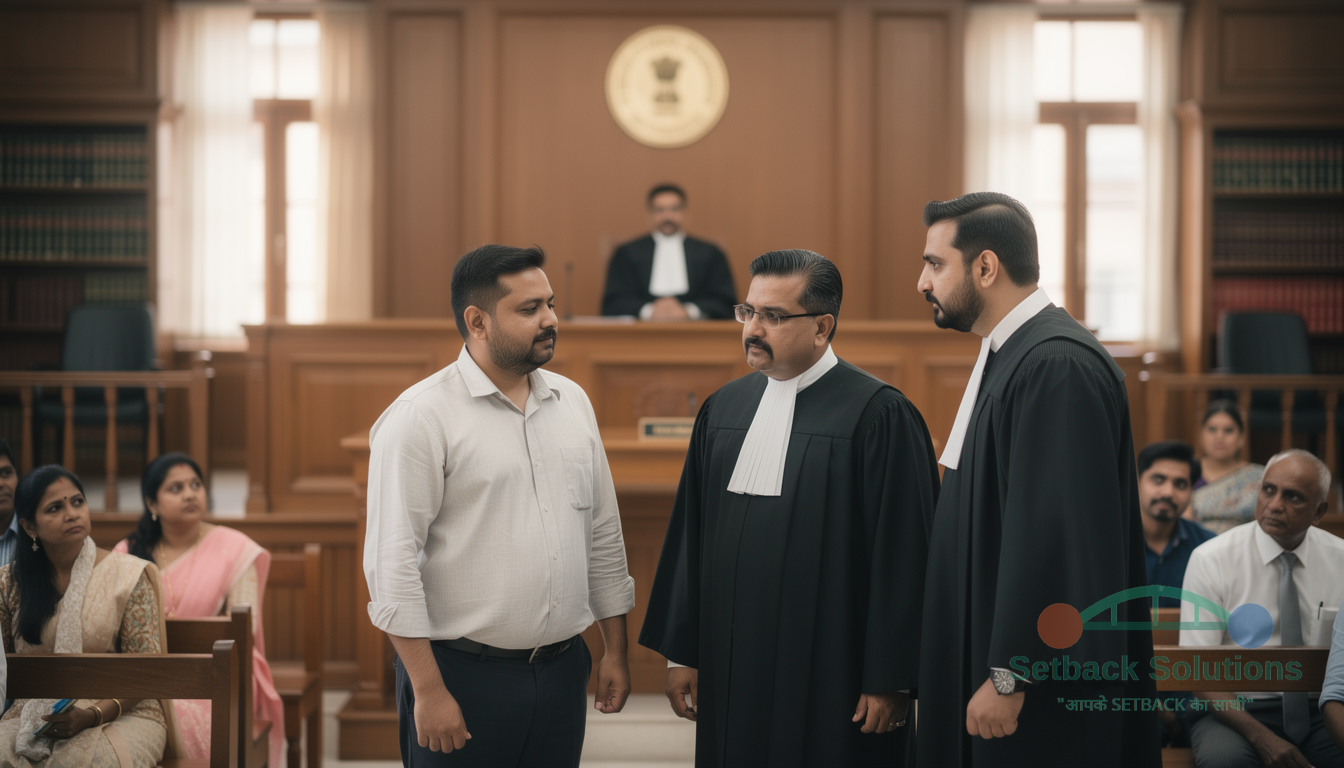
Ruled in favour of Nahar Singh (Appellant)
In Short
A mechanic who lost his leg in a road accident asked the court to increase his compensation after a lower tribunal cut down his disability percentage and payout. The High Court agreed that cutting his disability score was wrong and increased his compensation to properly reflect his lifelong struggles and actual earning losses.
The Parties
Party A: Nahar Singh
Party B: Joginder and others
Advocates & Judges
For Party A: Learned Advocate Mr. Sumit Gupta
For Party B: Learned Advocate Mr. Suvir Dewan
Judge(s): Hon'ble Justice Deepak Gupta
What the Case Was About
Nahar Singh was riding his motorcycle in July 2009 when he met with a terrible road accident caused by rash driving. He suffered severe injuries to his right leg, which ultimately had to be amputated from the lower part of his thigh. Because he worked as a mechanic and did agricultural work, losing his leg completely ruined his ability to earn a living the way he used to. He went to court asking for fair compensation, but the initial tribunal gave him a very low amount and wrongly cut his disability score down to fifty percent. Unhappy with that small amount, he challenged the decision in the High Court.
Judgment Date
24 September, 2026
The Outcome
The court ruled in favour of the injured appellant and allowed his appeal to increase his compensation payout. The High Court held that his actual job loss and permanent disability were severely undervalued by the lower tribunal.
What the Court Looked At
- The court noted that Nahar Singh suffered a permanent amputation of his right leg from the lower thigh.
- The court observed that the lower tribunal wrongly cut his permanent disability score down from eighty percent to fifty percent just by looking at an old workmen compensation law.
- The court highlighted that physical disability cannot be mechanically cut down without checking how the injury affects the person's actual job and daily work.
- The court noted that because Nahar Singh was a mechanic and farmer, losing his leg heavily destroyed his earning capacity.
- The court rejected the claim of earning twelve thousand rupees per month due to a lack of proof, but agreed to properly recalculate his lost earnings based on fair wages and full disability impact.
- The court acknowledged that getting an artificial prosthetic limb helps with movement, but it does not completely erase the lifelong economic damage of losing a limb.
"The effect of amputation has to be assessed with reference to the nature of work performed by the injured person."
What This Means For You
If you ever suffer a severe, life-altering injury in a road accident, do not let anyone casually brush aside your disability percentage. In this case, the injured man got into trouble because the lower tribunal tried to use a rigid, old formula from a different law to downplay his lost leg, ignoring the fact that he was a working mechanic who needed his physical strength to earn a living. The court made it clear that your actual job and the real-world impact of your injury matter far more than blind shortcuts. Always make sure your court case clearly explains how your specific injury stops you from doing your daily work. If you are struggling to make sense of your accident claim or feel like your injury's true impact is being ignored, Setback Solutions is here to help you understand your options and coordinate your next steps in plain, simple language.
You Still Have Options
Dealing with an unfair accident compensation award or feeling lost after a court decision can feel overwhelming and stressful. Whether you are wondering "lost my case, what now" or trying to figure out how to challenge a low payout, you do not have to walk this path alone. You can still explore getting a second opinion, switching your legal representation, or seeking non-judicial guidance to understand where you stand. Reach out to Setback Solutions today for friendly, plain-language help and coordination so you can figure out your best way forward. Please remember that Setback Solutions is not a law firm, does not give legal advice, and never guarantees any specific outcome.