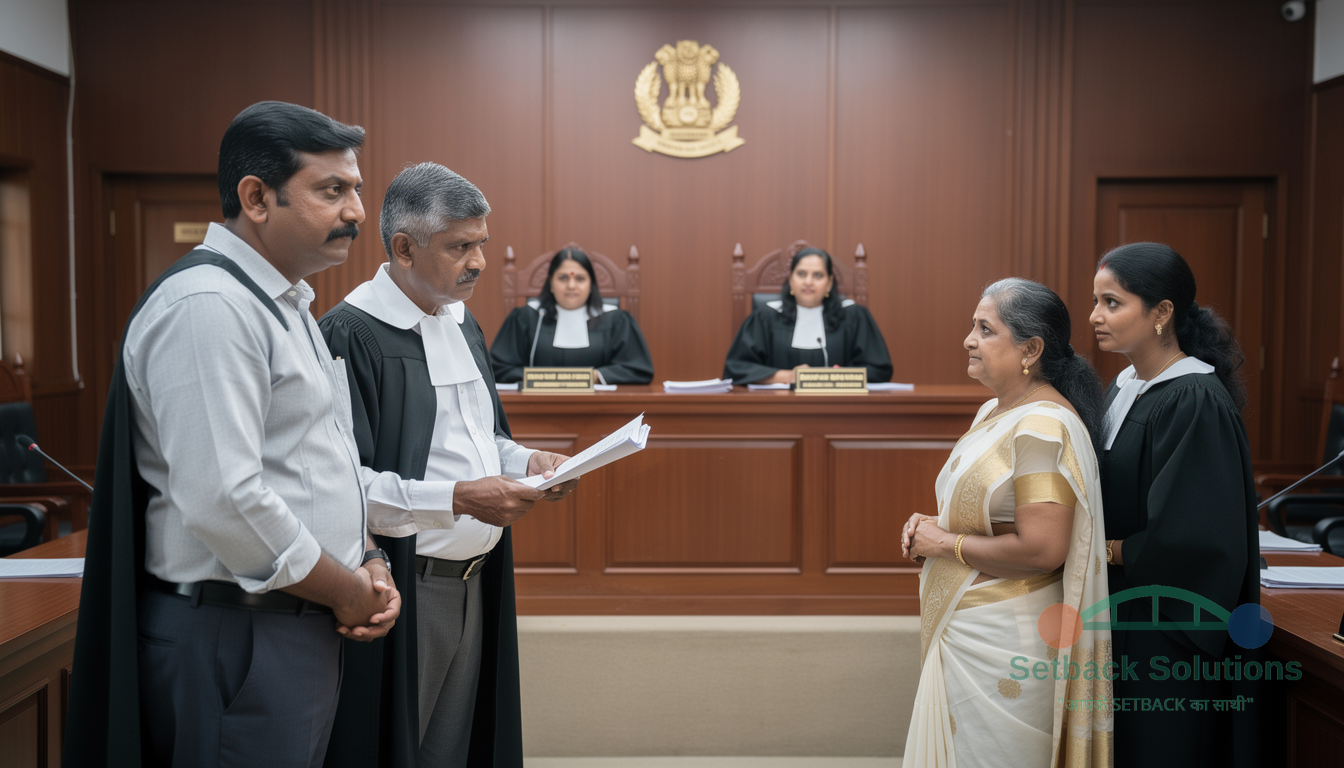
Appeal dismissed — ruling against Arun Murali (Appellant / Husband)
In Short
This case involved a dispute between a husband and wife who separated after living together for a few years, leading to multiple legal battles over divorce, reunion, and monthly financial support for the wife and their twin children. The husband wanted the marriage dissolved due to alleged cruelty and desertion, while the wife wanted to live together and sought financial support. The Kerala High Court reviewed the lower court's decision, which had granted the wife's request to live together, dismissed the husband's request for divorce, and ordered maintenance payments.
The Parties
Party A: Arun Murali (Husband)
Party B: Anjali Narayanan (Wife) and minor children Sonali Arun and Mithali Arun
Advocates & Judges
For Party A: Learned Advocate Mr. P.V. Anoop, Learned Advocate Mr. G. Aneesh, and Learned Advocate Mr. L.S. Bhagaval Das
For Party B: Learned Advocate Mrs. C. Leena
Judge(s): Hon'ble Justice J. Nisha Banu, Hon'ble Justice Shoba Annamma Eapen
What the Case Was About
The background is fully detailed in the court record. The couple got married in October 2007 and had twin daughters in March 2010. They lived together until September 2012, after which they started living apart. The wife filed a case asking the court to order her husband to live with her and requested monthly financial support for herself and the children, stating that life in the matrimonial home with the husband's parents was unbearable and that the husband had stopped caring for or supporting them. Meanwhile, the husband filed a separate case asking for a divorce, claiming his wife treated him and his family with cruelty, insulted them, made false accusations about his character, and deserted him without a valid reason. He also claimed she had her own income and did not need financial support, leading both sides to fight these issues out before the family court and eventually the High Court.
Judgment Date
13 October 2026
The Outcome
The court dismissed the husband's appeals and revision petition, upholding the lower court's decisions that allowed the wife's request for reunion and ordered maintenance for the family.
What the Court Looked At
- The court examined the wife's claim that she was forced to live separately due to domestic friction and a lack of support from the husband.
- The court considered the husband's allegations that the wife showed cruelty, was rude to his parents, and deserted him without cause.
- The court reviewed the separate legal actions filed by the wife seeking both restitution of conjugal rights and monthly maintenance for herself and the two minor children.
- The court weighed the conflicting claims regarding the husband's income from his job on an oil rig versus the wife's alleged earnings from hospital work.
What This Means For You
This case shows how long-standing domestic conflicts and disagreements over living arrangements with extended family can quickly snowball into complex legal battles involving divorce and financial support. When couples live apart and fail to communicate, sorting out who is responsible for desertion or cruelty becomes a difficult task for the courts, often resulting in prolonged litigation that affects both emotional well-being and finances. If you find yourself tangled in a bitter matrimonial dispute over separation or maintenance, Setback Solutions is here to help you plainly understand your options and coordinate your next steps without any legal jargon.
You Still Have Options
Dealing with a messy family dispute, facing court battles over maintenance, or wondering what to do after an unfavorable family court order can feel overwhelming and stressful. You do not have to figure it all out alone, and there are still ways to explore a second opinion, re-evaluate your approach, or seek non-judicial guidance on your next move. Reach out to Setback Solutions for plain-language help and coordination to understand where you stand and what choices are available to you. Please remember that Setback Solutions is not a law firm, does not provide legal advice, and never guarantees any specific court outcome.