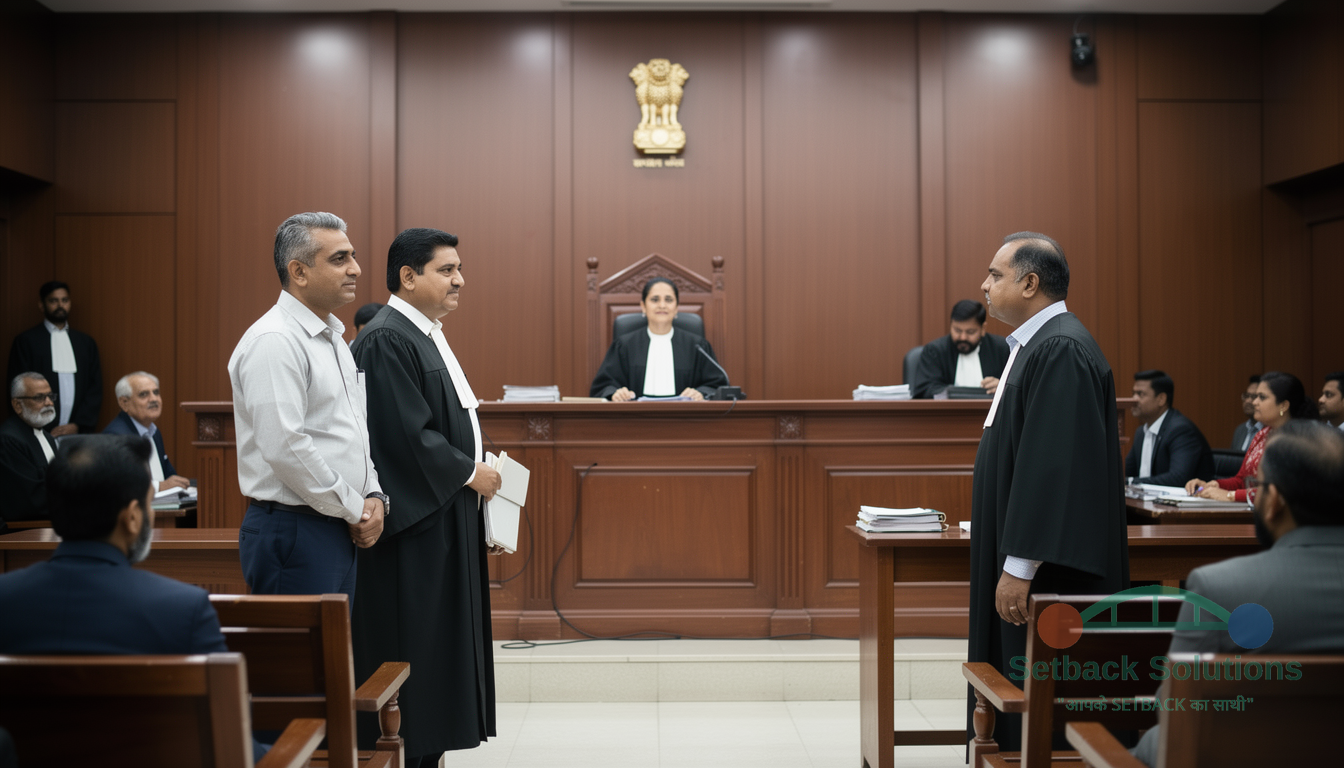
Ruled in favour of Mr. Sandeep Talwar (Petitioner)
In Short
Mr. Sandeep Talwar, a father-in-law, was falsely dragged into a criminal case filed by his daughter-in-law even though police found zero evidence against him. The High Court stepped in and set aside a lower court order that had blindly summoned him as an accused without giving any reasons.
The Parties
Party A: Mr. Sandeep Talwar
Party B: State Govt. of NCT of Delhi and Anr. (including Respondent No. 2)
Advocates & Judges
For Party A: Learned Advocate Mr. Ashim Vachher, Learned Advocate Mr. Sumeet Shokeen, Learned Advocate Ms. Saiba Mehr, Learned Advocate Mr. Nikhil Mehta, and Learned Advocate Mr. Kartikey Anand
For Party B: Learned Advocate Mr. Avinder Singh, Learned Advocate Mr. Devendra Kejariwal, Learned Advocate Ms. Arpita Bhattacharyya, Learned Advocate Mr. Navin Rawat, and Learned Advocate Mr. Ajay Vikram Singh
Judge(s): Hon'ble Justice Mini Pushkarna
What the Case Was About
This matter started as a family dispute where a woman registered a criminal case against her husband and several of her in-laws, including her father-in-law, Mr. Sandeep Talwar. After completing a thorough investigation, the police did not find any proof or evidence against the father-in-law or his son. Instead of filing formal charges against them, the police put their names in a separate suspect list. However, a lower court magistrate ignored this and blindly issued summons ordering them to appear as accused persons. Mr. Talwar then approached the High Court to challenge that hasty and unreasoned summoning order.
Judgment Date
21st September, 2026
The Outcome
The High Court ruled in favour of the petitioner and set aside the lower court's summoning order against Mr. Sandeep Talwar. The court directed the lower court to review the case properly and pass a fresh, reasoned order if it still intends to take any action.
What the Court Looked At
- The High Court observed that the police investigation was already complete and no incriminating evidence was found against Mr. Sandeep Talwar.
- The court noted that the police had placed the petitioner's name in Column No. 12 as a suspect rather than filing a formal chargesheet against him.
- The court highlighted that the lower court magistrate issued summons in a mechanical manner without recording any reasons or applying a judicial mind.
- The court pointed out that the petitioner was in an identical situation to his son, whose similar summoning order had already been successfully quashed by the High Court earlier.
"It is apparent that the petitioner has been summoned as an accused without recording any reason whatsoever, in a mechanical manner, despite the finding of the IO in the Chargesheet that no incriminating evidence was found against the petitioner."
What This Means For You
When police investigate a family dispute or criminal complaint and decide not to file formal charges against certain relatives, those relatives should theoretically be safe from trial. However, lower courts sometimes issue routine summons without actually reading the police files or checking if there is real proof. If you or someone in your family is named in an FIR but cleared by the police investigation, do not panic if a hurried court order arrives later; you have every right to challenge mindless summoning orders in a higher court. Setback Solutions can help you understand your options and coordinate next steps when dealing with confusing court paperwork.
You Still Have Options
If you are currently facing a false FIR or dealing with a mechanical court summons that feels completely unfair, please know that this is not the end of the road. Many people find themselves stuck wondering what to do next when lower courts issue orders without checking the facts. You can still explore getting a second opinion, evaluating your legal strategy, or seeking non-judicial guidance to understand how the system works. Reach out to Setback Solutions for help understanding your options and coordinating the next step. Please remember that Setback Solutions is not a law firm and does not give legal advice or guarantee any results, but we are here to offer plain-language help and coordination when you need it most.