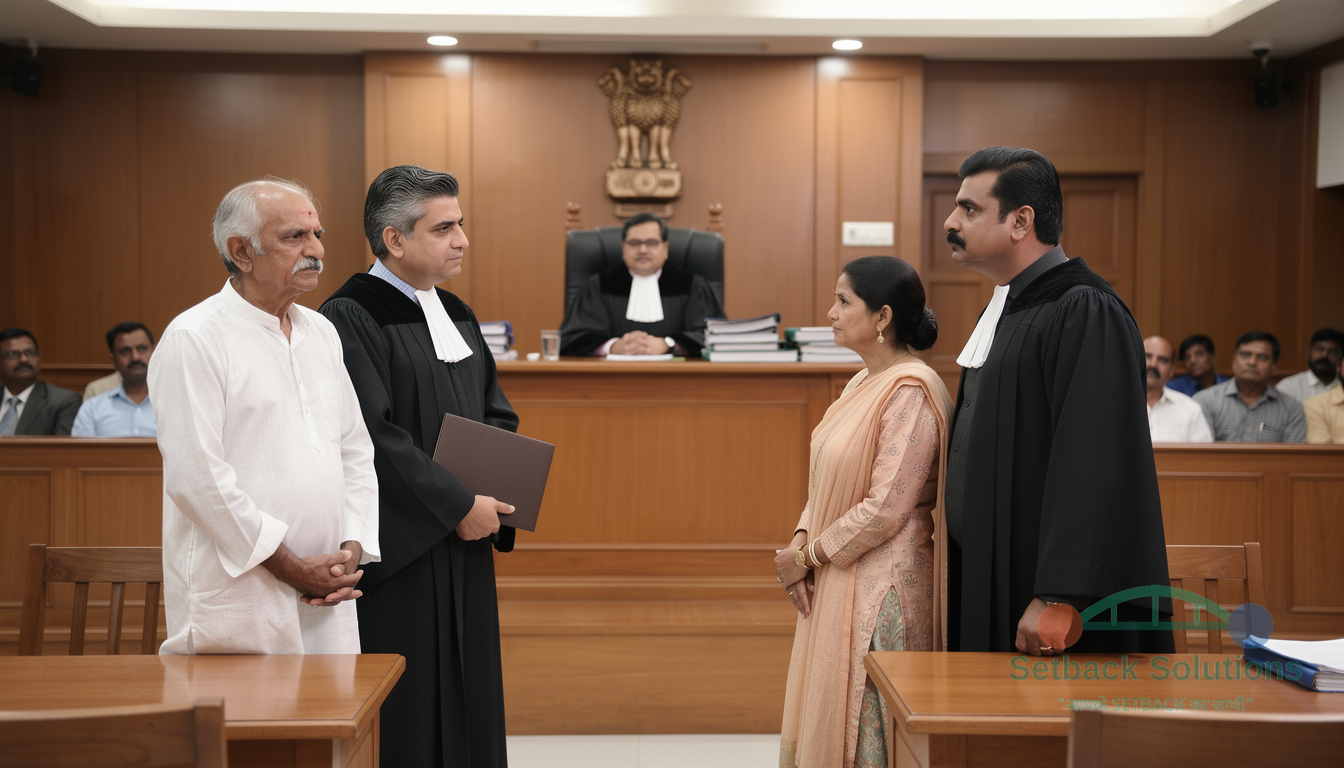
Appeal dismissed — ruling against Ram Charan Aggarwal (Petitioner)
In Short
This long-running family dispute involved a commercial property in Chandni Chowk that had been tied up in litigation for decades between relatives. After a court-ordered settlement and bidding process, one branch of the family acquired tenancy rights while the other branch bought the building and later demanded the shop back for their own business. The court ultimately upheld the eviction order against the tenant, ruling that the landlords' need for the space was genuine.
The Parties
Party A: Ram Charan Aggarwal (Deceased) Through Legal Heir (Petitioner)
Party B: Prem Lata & Anr. (Respondents)
Advocates & Judges
For Party A: Learned Advocate Mr. Alok Kumar, Sr. Advocate, with Ms. Manisha Agrawal Narain, Mr. Amit Kumar Singh, Mr. Varun Maheshwari, Mr. Manan Soni, Ms. Kavita Bardia and Ms. Suhani Jain, Advocates
For Party B: Learned Advocate Mr. Pawan S. Bindra, Senior Advocate with Mr. Sunil Dutt Dixit and Mr. Shashwat Dixit, Advs.
Judge(s): Hon'ble Justice Harish Vaidyanathan Shankar
What the Case Was About
The case revolves around a historic commercial property located in Katra Lehswan, Chandni Chowk, Delhi. Originally, a family partnership firm held the tenancy rights starting way back in 1935. After the original tenant passed away, bitter disputes erupted between his sons over family businesses and properties, leading to decades of court battles. Eventually, the family agreed to a settlement involving a bidding process for various lots. Through this process, the petitioner secured the tenancy rights to the Delhi property. However, another family branch had already purchased the actual ownership deed of the building years earlier. Once the dust settled, the owners filed an eviction petition claiming they urgently needed the ground floor shop for their own commercial activities since they gave up other business spaces during the settlement. The tenant fought back, arguing that the eviction request was unfair and contradicted the spirit of the family compromise. After moving back and forth through different benches and orders over the years, the matter landed before the High Court via a revision petition to challenge the lower rent controller's decision to throw out the tenant's defense request.
Judgment Date
27.10.2026
The Outcome
The court dismissed the revision petition filed by the tenant and upheld the lower rent controller's order granting eviction in favour of the landlords.
What the Court Looked At
- The court noted that a previous Division Bench judgment already settled that the family compromise only transferred tenancy rights to the petitioner, not building ownership.
- The court examined the landlords' claim of needing a suitable commercial place to run their business after dividing family assets.
- The court evaluated whether the tenant raised valid triable issues that deserved a full trial rather than a summary dismissal.
- The court reviewed the arguments concerning whether the landlords' need for the space was self-created by the voluntary family settlement.
"The partnership firm had only tenancy rights therein and that the compromise had conferred upon Shri Ram Charan Aggarwal the tenancy rights and not the ownership rights in the property."
What This Means For You
Family settlements and property divisions can become extremely complicated when different relatives hold ownership deeds and tenancy rights separately. In this case, the tenant assumed that paying money during a family settlement bidding process would secure their position long-term, but it did not shield them from a standard landlord eviction claim based on genuine business needs. If you are involved in settling property disputes with family members, do not assume that a compromise agreement automatically bars someone who owns the building from later asking you to vacate under rent laws. Always understand the exact legal difference between owning the bricks and mortar versus holding a tenant's lease. Setback Solutions can help you understand your options and coordinate next steps when dealing with complex family property disputes.
You Still Have Options
Dealing with an unexpected eviction order or an ongoing family property dispute can feel overwhelming, especially after spending years in litigation. Whether you are facing a sudden eviction notice, questioning a rent controller's order, or trying to figure out your next legal move, it is never the end of the road. You can still explore options like getting a second legal opinion, reviewing your case records, or seeking non-judicial guidance to understand where you stand. Reach out to Setback Solutions for help understanding your options and coordinating the next step. (Note: Setback Solutions is a plain-language assistance and coordination service, not a law firm, and does not provide legal advice or guarantee any specific court outcome.)