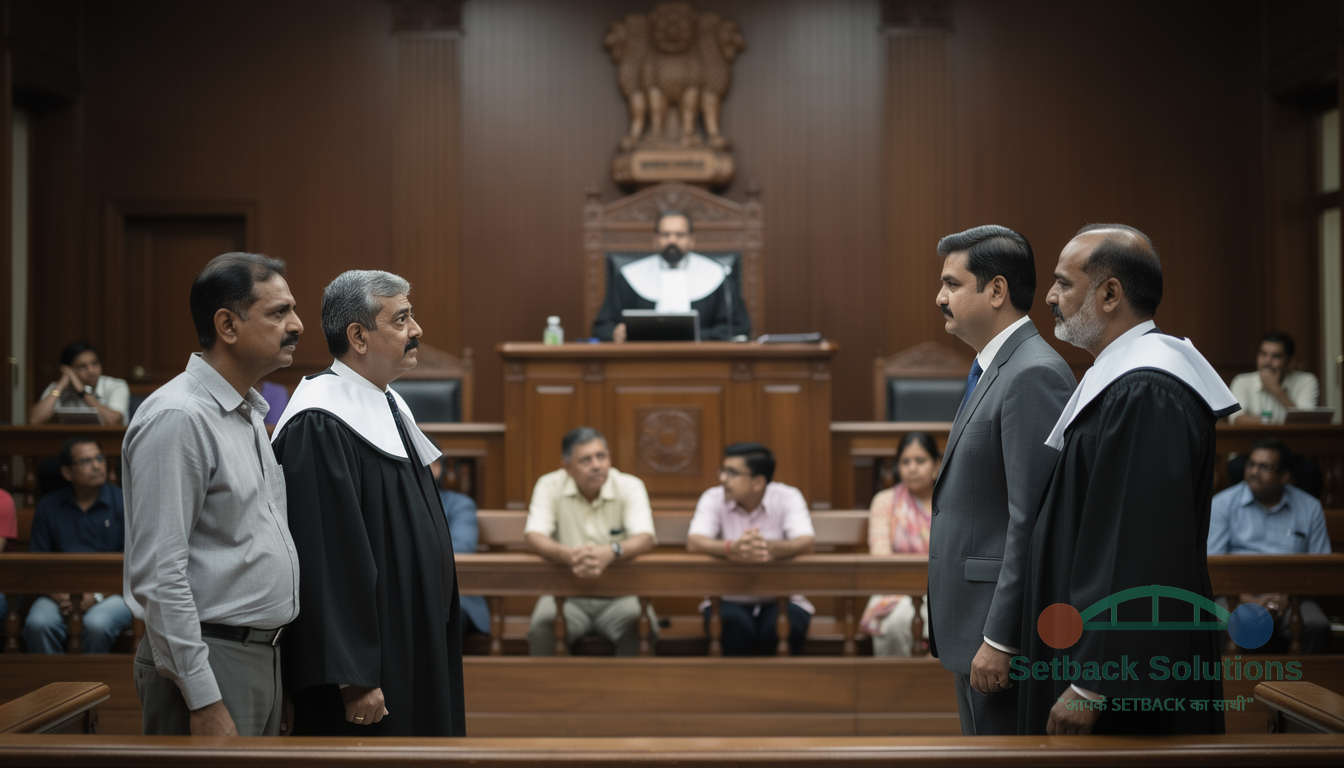
Mixed ruling — cross petitions partly allowed and partly dismissed
In Short
This long-running dispute involves the closure of the old TOMCO soap factory in Sewree, Mumbai, which was taken over by Hindustan Unilever Limited (HUL) in the 1990s. When HUL shut down the factory in 2004 after most workers took voluntary retirement, a small group of remaining workers and their unions fought back in labor tribunals and the High Court demanding their jobs back or better payouts. The Bombay High Court reviewed the cross challenges from both the company and the workers, addressing issues of factory closure, voluntary retirement benefits, and retrenchment compensation.
The Parties
Party A: Tomco Kamgar Union, Krantikari Kamgar Union, TOMCO Workers Union, Rajendra M. Sawant, and other erstwhile workmen
Party B: M/S. Hindustan Unilever Limited (HUL)
Advocates & Judges
For Party A: Learned Advocate Mr. Jogy Scaria, Learned Advocate Mr. Raju M. Yamgar, Learned Advocate Mr. Ashok D. Shetty, Learned Advocate Ms. Rita K. Joshi, Learned Advocate Ms. Bushra A. Moughal, Learned Advocate Mr. Bennet D'costa, Learned Advocate Ms. Jignasha Pandya, Learned Advocate Mr. Sushant Dekhane
For Party B: Learned Advocate Mr. Kiran Bapat (Senior Advocate), Learned Advocate Mr. R.N. Shah, Learned Advocate Mr. Netaji Gawade
Judge(s): Hon'ble Justice Sandeep V. Marne
What the Case Was About
The case centers around the historic Tata Oil Mills Company (TOMCO) factory in Sewree, Mumbai, famous for producing iconic Indian soap brands like Moti and Hamam. After HUL merged with TOMCO in the 1993-1994 period, the new management decided to wind down operations at the Sewree site. HUL introduced voluntary retirement schemes in 1996 and 1999, prompting hundreds of workers to step down. However, a group of around 113 workers chose not to take the voluntary retirement package. In October 2004, HUL officially closed the factory, leaving these remaining workers unemployed. The workers and their unions challenged the closure, demanding full reinstatement with back wages, while HUL challenged orders that forced it to pay extra voluntary retirement benefits or compensation. This led to multiple labor tribunal references and cross-petitions before the Bombay High Court.
Judgment Date
06 OCTOBER 2026
The Outcome
The court addressed multiple cross-petitions filed by both the company and the workers' unions regarding factory closure, voluntary retirement benefits, and compensation. The final orders balanced the competing claims by addressing the legality of the closure and the financial dues owed to the workers left behind.
What the Court Looked At
- The court examined the merger and amalgamation of TOMCO with Hindustan Unilever Limited approved back in May 1994.
- It reviewed the implementation of voluntary retirement schemes in 1996 and 1999, which successfully retired hundreds of workers from the Sewree facility.
- The court considered the closure notice issued by HUL on 8 October 2004, which formally shut down the factory operations.
- It evaluated the competing claims of workers demanding reinstatement versus the company's right to close an idle manufacturing unit.
- The court looked at the earlier labor tribunal awards that had granted either voluntary retirement benefits or retrenchment compensation to different groups of left-over workers.
What This Means For You
When a major company merges or restructures its business, employment terms and factory operations can change drastically, often leading to long-drawn legal battles over closures and compensation. For workers, refusing voluntary retirement schemes can sometimes lead to prolonged uncertainty and years spent fighting in labor courts rather than securing immediate resolution. If you or your union find yourselves facing sudden factory closures, retrenchment, or disputes over company-wide mergers, it is vital to keep meticulous records of your employment history, wage structures, and notices served by the management. Setback Solutions can help you understand your options and coordinate next steps by breaking down complex employment records and court updates into plain, easy-to-understand language.
You Still Have Options
Dealing with prolonged labor disputes, sudden factory closures, or contested retrenchment compensation can feel overwhelming and exhausting, especially when cases drag on for years through tribunals and high courts. If you are facing a similar employment deadlock, wondering whether to accept a settlement, or trying to figure out your next move after a complex labor ruling, you do not have to navigate it alone. You can explore a second opinion, review your legal strategy with independent professionals, or seek non-judicial guidance to understand where your case stands. Reach out to Setback Solutions for help understanding your options and coordinating the next steps in plain, everyday language. Please remember that Setback Solutions is not a law firm and does not provide formal legal advice or guarantee specific court outcomes.