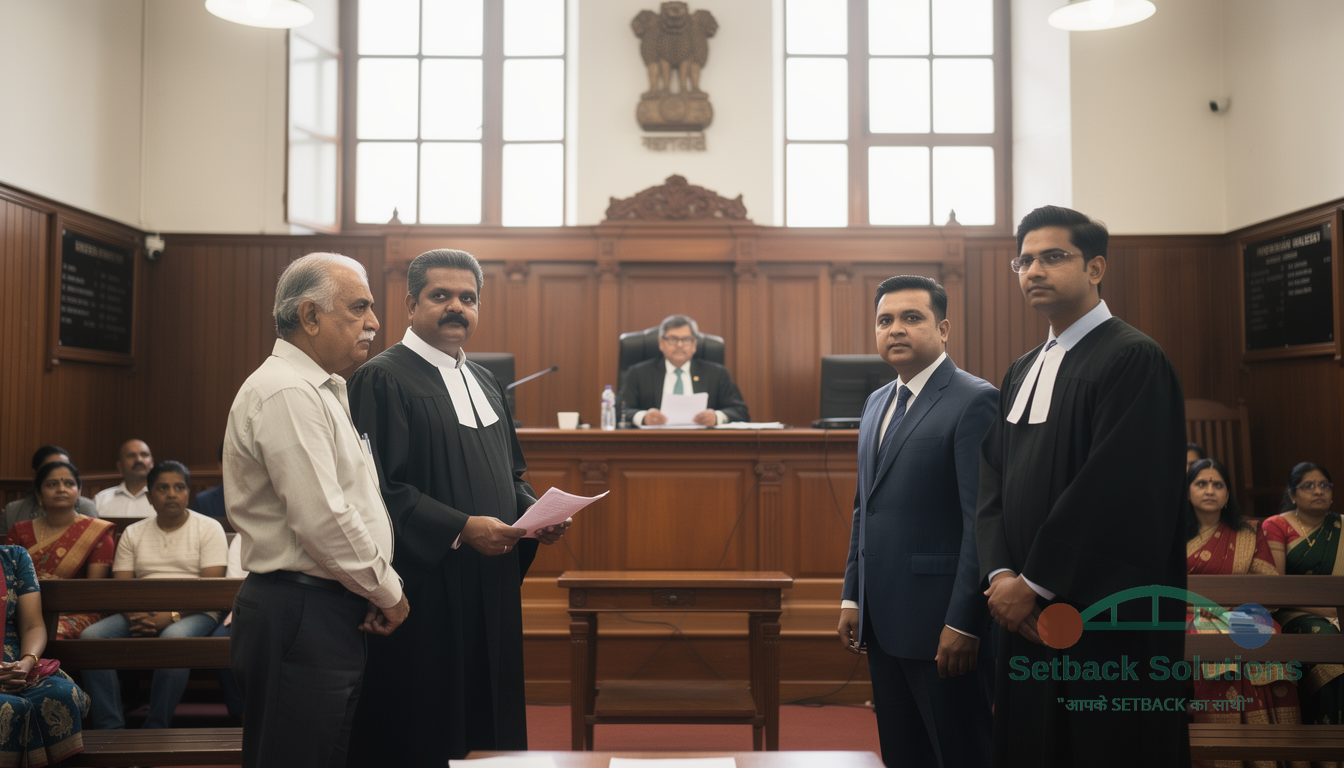
Appeal dismissed — ruling against Rajendra M. Sawant (Petitioner) and other parties
In Short
This case involved a long-running dispute between Hindustan Unilever Limited and its workers over the closure of an old factory in Sewree, Mumbai, that once made famous soaps like Moti and Hamam. After offering voluntary retirement schemes to hundreds of workers, the company shut down the factory for the remaining workers who refused to retire. The High Court reviewed cross-challenges from both the company and worker unions regarding reinstatement, back wages, and compensation, ultimately addressing the validity of the closure and payouts.
The Parties
Party A: Rajendra M. Sawant, TOMCO Kamgar Union, Krantikari Kamgar Union, and other workmen
Party B: M/s. Hindustan Unilever Limited (HUL)
Advocates & Judges
For Party A: Learned Advocate Mr. Jogy Scaria, Learned Advocate Mr. Raju M. Yamgar, Learned Advocate Mr. Ashok D. Shetty, Learned Advocate Ms. Rita K. Joshi, Learned Advocate Ms. Bushra A. Moughal, Learned Advocate Mr. Bennet D'costa, Learned Advocate Ms. Jignasha Pandya, Learned Advocate Mr. Sushant Dekhane
For Party B: Learned Advocate Mr. Kiran Bapat, Learned Advocate Mr. R.N. Shah, Learned Advocate Mr. Netaji Gawade
Judge(s): Hon'ble Justice Sandeep V. Marne
What the Case Was About
The Tata Oil Mills Company, famous for iconic Indian soap brands like Moti and Hamam, merged with Hindustan Lever Limited in the 1990s. The new management found that the factory operations at Sewree, Mumbai, had stopped and workers were sitting idle while drawing wages. The company introduced voluntary retirement schemes in 1996 and 1999, which hundreds of employees accepted. However, a small group of workers refused to take voluntary retirement. In October 2004, the company officially closed the factory and paid out dues. The unions and workers protested the closure, demanding their jobs back with full back wages, which led to multiple industrial tribunal references and eventually cross-petitions in the High Court.
Judgment Date
6 October 2026
The Outcome
The court addressed the cross-petitions filed by both the company and the worker unions against previous tribunal awards, reviewing whether the factory closure was valid and what financial benefits the remaining workers were entitled to receive.
What the Court Looked At
- The background of the TOMCO merger with Hindustan Unilever Limited in 1993-94 and the subsequent discontinuation of manufacturing at the Sewree factory.
- The implementation of voluntary retirement schemes in 1996 and 1999, which successfully retired 918 workers from the establishment.
- The company's decision to issue a formal closure notice on 8 October 2004 after a remaining group of workers refused to opt for voluntary retirement.
- The worker unions' protests and demands for withdrawal of the closure notice, reinstatement, and back wages through various industrial tribunal references.
- The conflicting awards passed by the Industrial Tribunal, where one award granted voluntary retirement benefits while another directed the payment of retrenchment compensation.
What This Means For You
When a company merges with a larger corporate entity and restructures its operations, employees facing factory closures or redundancy are often offered voluntary retirement packages. Refusing such schemes and choosing to fight a closure can lead to complex, decades-long legal battles through industrial tribunals and high courts. If you find yourself facing employment restructuring or factory shutdowns, it is vital to carefully evaluate your exit options rather than relying solely on prolonged litigation that may take many years to resolve. Setback Solutions can help you understand your options and coordinate your next steps in plain language, though we do not provide legal advice or guarantee outcomes.
You Still Have Options
Dealing with a complicated employment dispute, a closed factory, or a contested tribunal award can feel overwhelming when you are unsure of your next move. It is not the end of the road, and you can still explore second opinions, alternative guidance, or non-judicial ways to understand your standing. Reach out to Setback Solutions for plain-language help and coordination to figure out your options moving forward. Please remember that Setback Solutions is not a law firm, does not provide legal advice, and does not promise any specific result.