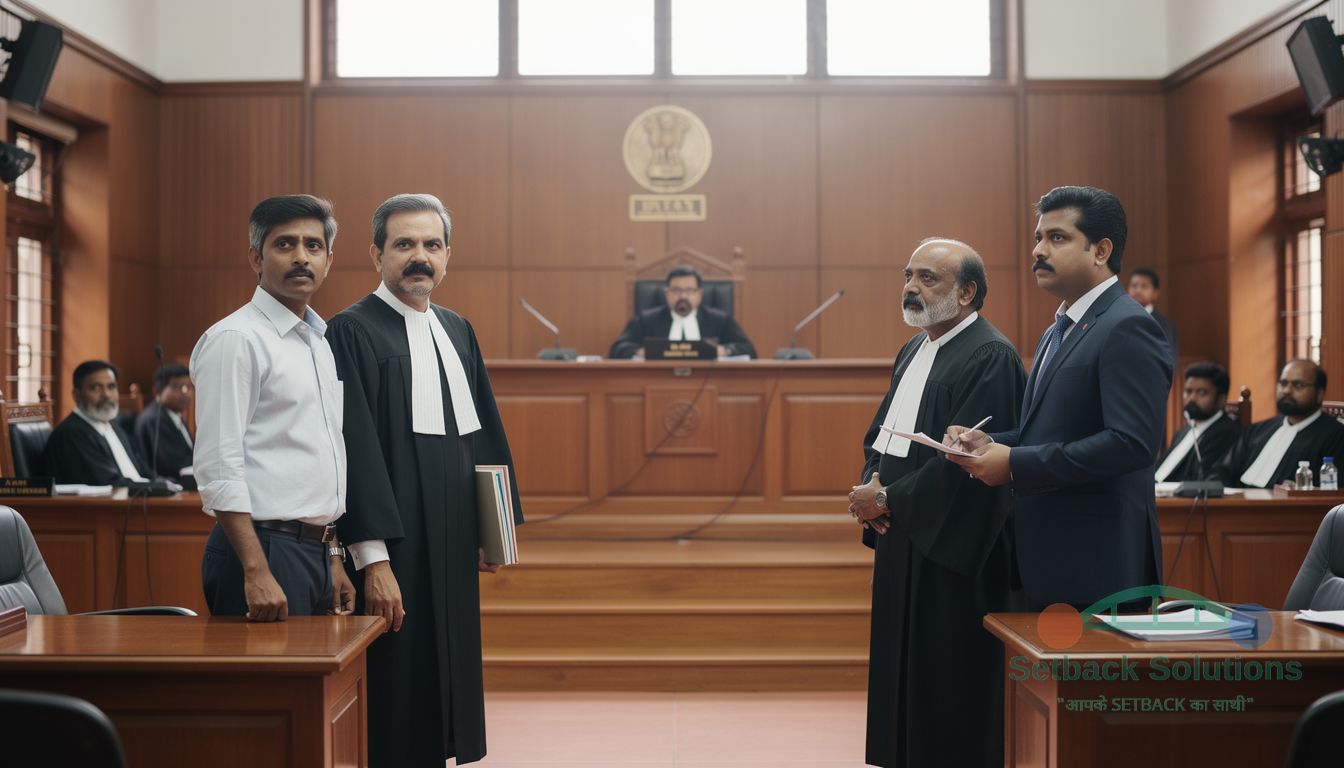
Appeal dismissed — ruling against National Insurance Co. Ltd (Appellant)
In Short
An injured autorickshaw driver sought compensation after a severe road accident left him with permanent disabilities. The insurance company tried to avoid paying by arguing about who actually owned the vehicle and whether an employer-employee relationship truly existed. The High Court rejected these arguments, confirming that the injured driver was indeed entitled to his compensation and the insurance company must pay.
The Parties
Party A: National Insurance Co. Ltd
Party B: Prakashan P.V., Vipin, Basheer, and Dineshkumar
Advocates & Judges
For Party A: Learned Advocate Mr. Majo K. Jacob and Learned Advocate Mr. George A. Cherian
For Party B: Learned Advocate Mr. C. Harikumar, Learned Advocate Ms. Sandra Sunny, Learned Advocate Mr. Arun Kumar M.A., Learned Advocate Ms. Farah Jyothi Pradeep, Learned Advocate Mr. Ranjith Xavier, Learned Advocate Mr. Philip.N.Joseph, Learned Advocate Ms. P.F. Rosy, and Learned Advocate Ms. Sneha Rajiv
Judge(s): Hon'ble Justice S. Manu
What the Case Was About
Back in May 2008, an autorickshaw driver named Prakashan was driving his vehicle when a bus crashed into him, causing severe injuries and lasting physical disability. He filed a claim for compensation under the law meant to protect injured workers. However, the insurance company and various vehicle owners started pointing fingers at each other. They argued that the person who insured the vehicle was not the official registered owner on paper, and they claimed there was no formal proof of an employer-employee relationship. This dispute dragged on, forcing the matter up to the High Court of Kerala to decide who should ultimately pay the price for the driver's suffering.
Judgment Date
7 October 2026
The Outcome
The insurance company's appeal was dismissed by the court. The High Court ruled that the lower compensation authority made no legal errors in deciding who the employer was, meaning the injured driver's payout stands locked in.
What the Court Looked At
- The injured driver clearly stated under oath that he was employed to drive the autorickshaw by the person who held possession and control of it.
- Police records and reports corroborated the driver's account of his employment and the unfortunate accident.
- The insurance company had willingly issued an active insurance policy covering this exact vehicle and naming the person who controlled it.
- The court noted that it cannot interfere with factual findings made by lower compensation authorities unless there is a severe, glaring error in how evidence was handled.
"Having insured the vehicle and issued the policy in favour of the second respondent, I am of the view that it is not open to the appellant company to take exception to the finding of the Commissioner that it had the liability to indemnify the insured."
What This Means For You
When workers suffer life-altering injuries on the job, insurance companies often try to use paperwork confusion—like mismatched vehicle ownership records or informal employment arrangements—to escape paying rightful claims. If you drive a vehicle for work and get hurt, technical arguments raised by insurance providers about registration papers should not automatically rob you of your compensation if you were genuinely doing your job. Setback Solutions can help you understand your options and coordinate next steps when dealing with confusing accident compensation claims.
You Still Have Options
Dealing with an insurance company that refuses to pay out after an accident can leave you feeling trapped and exhausted, especially when you are recovering from serious injuries. It is definitely not the end of the road, and you can still explore alternative choices like getting a second opinion, re-evaluating your case strategy, or seeking non-judicial guidance. Reach out to Setback Solutions for help understanding your options and coordinating the next step. Please remember that Setback Solutions is not a law firm, does not provide legal advice, and does not promise specific outcomes.