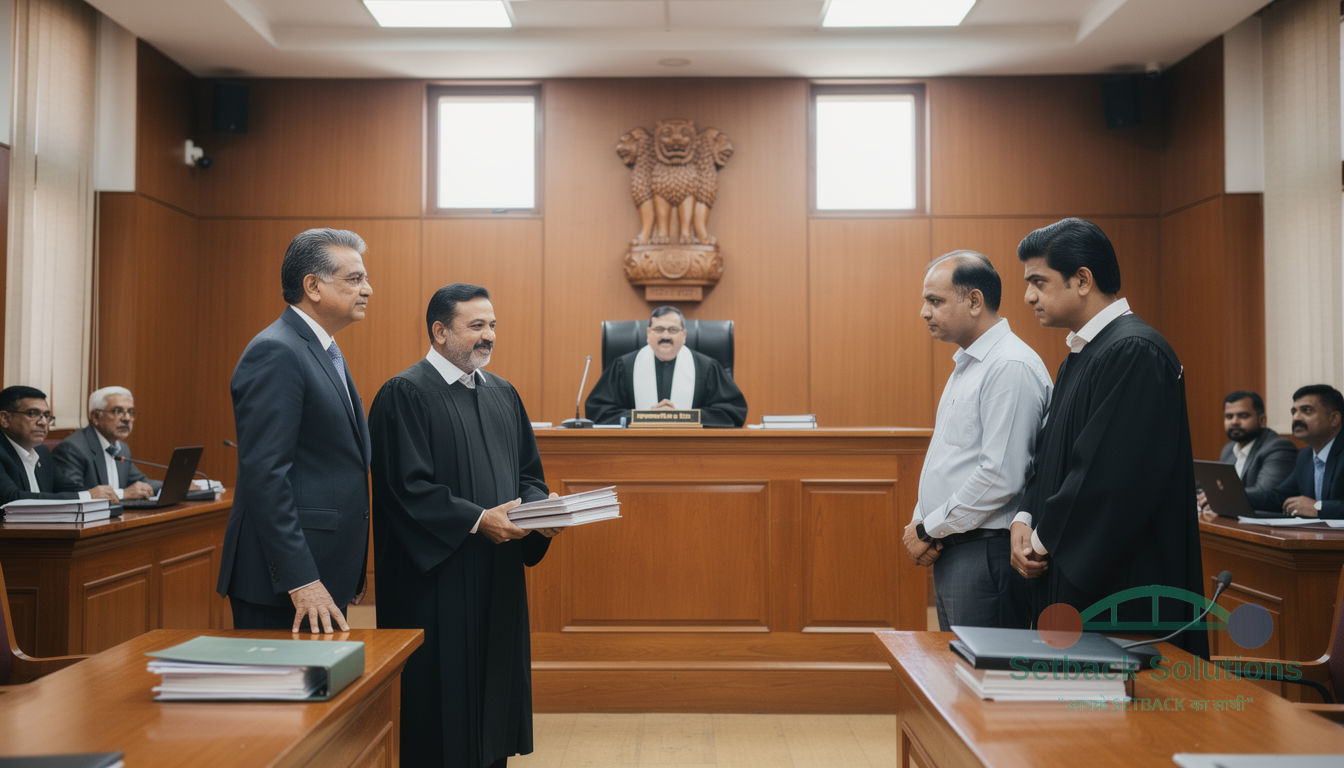
Ruled in favour of M/S Onycon Infrastructure (Petitioner)
In Short
An infrastructure firm gave bank guarantees as security for a specific civil construction project. The developer later tried to cash those guarantees because of a dispute under a completely different supply agreement. The Delhi High Court stepped in to block the encashment, ruling that guarantees meant for one contract cannot be used to settle disputes under another.
The Parties
Party A: M/S Onycon Infrastructure
Party B: Virtuaal Pareng Hydro Private Limited & Anr.
Advocates & Judges
For Party A: Learned Advocate Mr. Sujoy Datta, Learned Advocate Mr. N.P.S. Chawla, Learned Advocate Mr. Vibhor Kapoor, Learned Advocate Ms. Nishtha Khurana, Learned Advocate Mr. Shubham Raghuwanshi, and Learned Advocate Ms. Kinjal Sharma
For Party B: Learned Advocate Mr. Manish Sharma, Learned Advocate Mr. Vijay Kaundal, Learned Advocate Mr. Nitish Kant Sharma, Learned Advocate Ms. Sapna Jha, Learned Advocate Mr. Ninad Dogra, and Learned Advocate Ms. Adya Rao
Judge(s): Hon'ble Justice Tushar Rao Gedela
What the Case Was About
M/S Onycon Infrastructure was awarded a major civil works contract for a hydro-electric project in Arunachal Pradesh and provided two bank guarantees as security for a mobilization advance. Later, the same parties signed a separate framework agreement for supplying cement and steel, which did not involve any bank guarantees. When disputes arose, the developer sent a legal notice demanding money under the cement and steel agreement, and then tried to cash the bank guarantees that belonged entirely to the civil works contract. Onycon Infrastructure rushed to the High Court to stop the bank from handing over the money.
Judgment Date
27.10.2026
The Outcome
The court protected the infrastructure firm by preventing the encashment of the bank guarantees tied to the civil works contract. The judge ruled that mixing up separate business agreements to cash security instruments is impermissible.
What the Court Looked At
- The court observed that the two bank guarantees were furnished exclusively as security for the mobilization advance under the Civil Works Contract.
- The court noted that the separate Framework Agreement for cement and steel did not contemplate or mention any bank guarantees.
- The court evaluated whether the developer could use security from one contract to cover alleged defaults in an entirely independent contract.
- The court found that special equities favored the contractor because the guarantees had no nexus to the separate supply agreement.
"The bank guarantees i.e. BG-1 and BG-2 both have been furnished to the respondent no.1 in respect of the Civil Works Contract alone and has no relation to the Framework Agreement... and thus could not be encashed on an alleged default/breach of the Framework Agreement."
What This Means For You
When you sign multiple contracts with the same business partner, you must keep your financial securities strictly separated. In this case, the contractor got into trouble because the developer tried to cross-apply bank guarantees meant for a construction project to settle a dispute over a separate supply deal. If you deal with multiple agreements, always ensure that your bank guarantees, deposits, and securities are explicitly linked only to their intended project so that a dispute in one area cannot drain your funds elsewhere. Setback Solutions can help you understand your contract documents and coordinate your next steps in plain language, though we do not provide legal advice or guarantee outcomes.
You Still Have Options
Are you facing a sudden attempt by a business partner to encash your bank guarantees or security deposits for a completely different dispute? It can feel overwhelming and threaten your company's cash flow, but it is not the end of the road. You can still explore options like getting a second review of your contract terms, coordinating non-judicial guidance, or speaking with a fresh set of experts. Reach out to Setback Solutions for help understanding your options and coordinating the next step. Please remember that Setback Solutions is not a law firm, does not give legal advice, and does not guarantee any specific result.