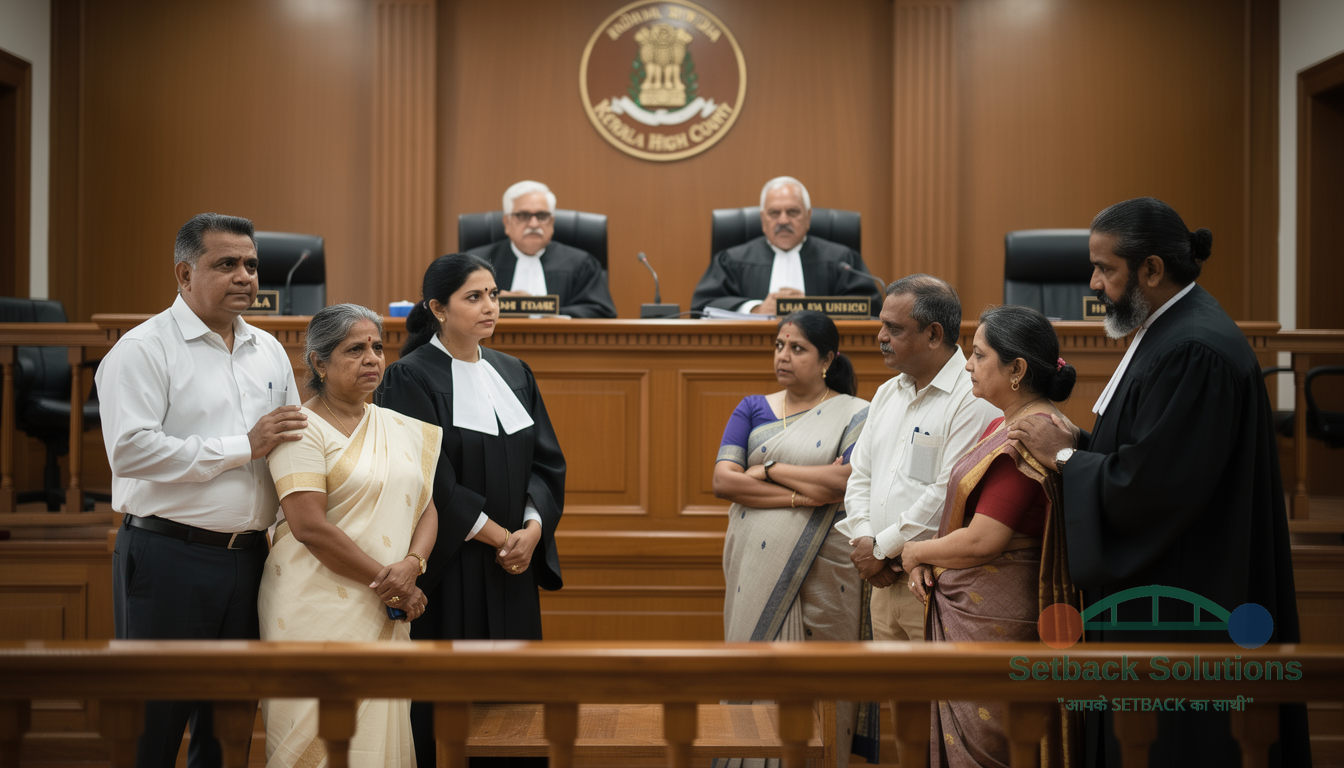
Appeal dismissed — ruling against Asokan P.K. and Latha (Petitioners/Tenants)
In Short
Landlords in a rent control dispute wanted to bring in new evidence and a court commissioner to check for vacant rooms after their evidence stage had closed. The tenants objected, arguing that the landlords failed to reserve this right beforehand under procedural rules. The Kerala High Court held that courts still have the inherent power to allow further evidence in the interests of justice, even without an explicit earlier reservation.
The Parties
Party A: Asokan P.K. and Latha
Party B: Balan K.V. (Expired), Sunil K.B., Anil K.B., and Sindhu Ravi
Advocates & Judges
For Party A: Learned Advocate Ms. Merin Rose, Learned Advocate Mr. Aype Joseph, Learned Advocate Mr. Paul S. Manguzha
For Party B: Learned Advocate Mrs. Saritha Thomas, Learned Advocate Mr. Sahl Abdul Kader
Judge(s): Hon'ble Justice Sathish Ninan, Hon'ble Justice P. Krishna Kumar
What the Case Was About
Landlords filed a rent control petition to evict tenants from a building. During the trial, the tenants brought witnesses to prove there were no other vacant rooms available in the area for them to move their business. Later, after evidence closed, the landlords asked the trial court to appoint a commissioner to inspect specific buildings in the locality and to examine additional witnesses to prove those rooms were actually vacant. The tenants challenged this permission in the High Court, arguing that the landlords did not formally reserve their right to bring rebuttal evidence at the start, making the late additions illegal.
Judgment Date
26 October 2026
The Outcome
The court dismissed the tenants' petition and upheld the lower court's order allowing the landlords to introduce additional evidence and appoint a commissioner.
What the Court Looked At
- The tenants argued that Rule 3 of Order XVIII CPC bars a party from bringing rebuttal evidence unless they expressly reserved that right beforehand.
- The court noted that while reserving the right is standard and desirable, failing to do so does not automatically strip the court of its power to admit necessary evidence.
- Referring to Supreme Court precedents, the court observed that civil courts retain inherent powers to permit further evidence at any stage if required in the interest of justice.
- The court rejected the idea that appointing a commissioner after the closure of evidence is strictly prohibited in all circumstances.
"The omission of the rule does not take away the court's inherent power to call for any witness at any stage either suo motu or on the prayer of a party invoking the inherent powers of the court."
What This Means For You
Procedural rules are meant to guide courts, but they are not rigid traps that completely block the truth from coming out. In this case, the tenants tried to stop the landlords from bringing late evidence because the landlords forgot to formally check a procedural box during trial. However, the court made it clear that judges can step in and permit late evidence or court commissioners if it helps them reach a fair and just decision. If you are locked in a legal battle, do not assume a technical slip-up by the other side will automatically keep vital facts away from the judge, as courts prioritize overall fairness. Setback Solutions can help you understand your procedural options and coordinate next steps when navigating complex litigation disputes.
You Still Have Options
Dealing with unexpected court orders, missed procedural steps, or feeling like the legal process is turning against you can be overwhelming. Whether you are facing a tough property dispute, a difficult rental battle, or just trying to figure out your next move after an unfavorable ruling, you do not have to handle it alone. Exploring a second opinion or seeking non-judicial guidance can bring much-needed clarity. Reach out to Setback Solutions today for plain-language help and coordination to understand your options and map out the next step. Please note that Setback Solutions is not a law firm and does not provide formal legal advice or guarantee any specific court outcome.