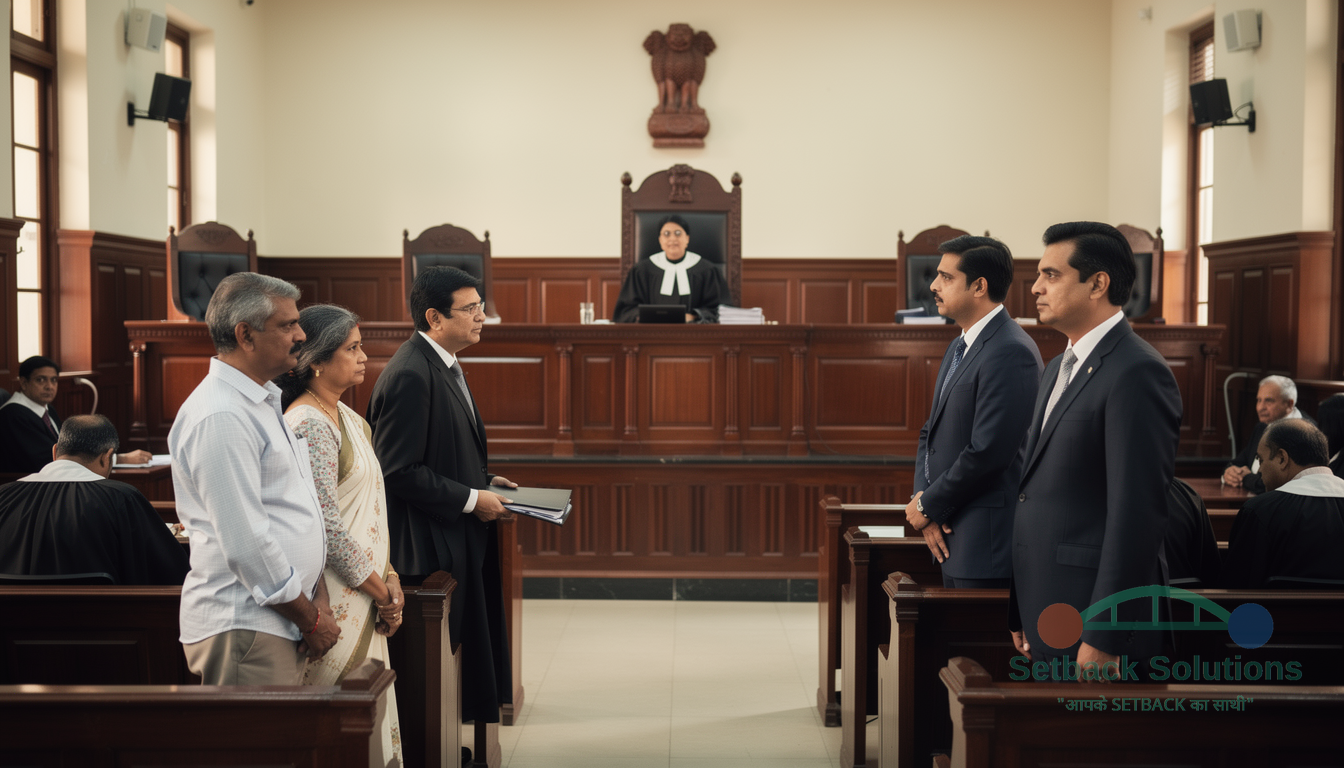
Appeal dismissed — ruling against Kiran Kriplani and Ashok Kriplani (Appellants)
In Short
A brother and sister took loans from a bank backed by pledged shares, but a long legal battle ensued after the bank sued them for recovery and lost. Years later, they filed a new lawsuit demanding five lakh rupees in damages for mental agony and a false case, but the court dismissed their claim. The High Court upheld this dismissal, ruling that simply losing a recovery suit does not mean the bank maliciously prosecuted them.
The Parties
Party A: Kiran Kriplani and Ashok Kriplani
Party B: ICICI Bank Ltd. (Formerly known as Sangli Bank Ltd.)
Advocates & Judges
For Party A: Learned Advocate Mr. Ashok Kriplani (in person and on behalf of Appellant No.1)
For Party B: Learned Advocate Mr. Amol Sharma and Learned Advocate Mr. Ateev Mathur
Judge(s): Hon'ble Justice Neena Bansal Krishna
What the Case Was About
Back in 1994, Kiran Kriplani and Ashok Kriplani took two separate loans of two lakh fifty thousand rupees each from Sangli Bank (which later merged with ICICI Bank). These loans were secured by pledging shares whose value was higher than the loan amounts. Over time, financial troubles hit, loan periods expired, and disputes arose over whether the bank properly swapped or sold the pledged shares without giving proper notice to the borrowers.
In December 1997, the bank filed a civil suit against them to recover unpaid money. That recovery suit dragged on for years until December 2012, when a lower court finally dismissed the bank's case, finding that the bank had acted prematurely and sold shares behind the scenes without proper notice. Feeling humiliated, harassed, and defamed by what they called a false and vexatious lawsuit, the borrowers waited until December 2015 to file a fresh lawsuit demanding five lakh rupees in damages from the bank. The lower court dismissed that damage claim in May 2025, leading the borrowers to file this appeal in the High Court.
Judgment Date
16 September 2026
The Outcome
The Delhi High Court dismissed the appeal, ruling that the lower court was correct to throw out the borrowers' claim for damages because they failed to prove the strict legal requirements of a malicious prosecution case.
What the Court Looked At
- The court noted that the borrowers' suit for damages was, in substance, a claim for malicious prosecution based on the bank's earlier recovery lawsuit.
- The court observed that under the law, filing a civil suit—even if the bank ultimately loses—does not automatically give the winning defendant the right to sue for damages unless specific conditions are met.
- The court highlighted that to win a malicious prosecution case, a plaintiff must prove that the earlier suit was brought without any reasonable cause and with malice, and that it ended in their favor.
- The court accepted that while the bank's earlier recovery suit was indeed dismissed, the borrowers failed to prove that the bank acted with malicious intent rather than a genuine, albeit flawed, attempt to recover money.
"The mere dismissal of a suit does not make the litigation 'malicious' so as to entitle the defendant to claim damages."
What This Means For You
If a bank or a company sues you to recover money and you successfully win the case by proving they were wrong, it can feel like a huge victory after months or years of stress. However, this case teaches a vital lesson: winning a court case does not automatically mean you can turn around and successfully sue them back for damages, mental agony, or harassment. The Indian legal system sets a very high bar for claims like malicious prosecution. You cannot simply point to the stress and legal costs of defending yourself; you must legally prove that the other party filed the lawsuit purely out of malice and without any honest legal grounds. If you are facing a confusing loan dispute or wondering whether you have grounds to take legal action after winning a case, Setback Solutions can help you understand your options and coordinate your next steps in plain, simple language.
You Still Have Options
Dealing with an unexpected loan recovery battle, a dismissed case, or wondering what your next legal move should be can feel deeply overwhelming and stressful. You might be asking yourself if you can recover your costs, fight back against unfair bank actions, or what to do now that a judgment has gone against you. Remember that this is not the end of the road, and you can still explore second opinions, alternative legal strategies, or non-judicial guidance to navigate your situation. You can reach out to Setback Solutions for help understanding your options and coordinating your next step. Please note that Setback Solutions is not a law firm, does not provide legal advice, and never guarantees any specific outcome, but is here to offer plain-language help and coordination when you need it most.