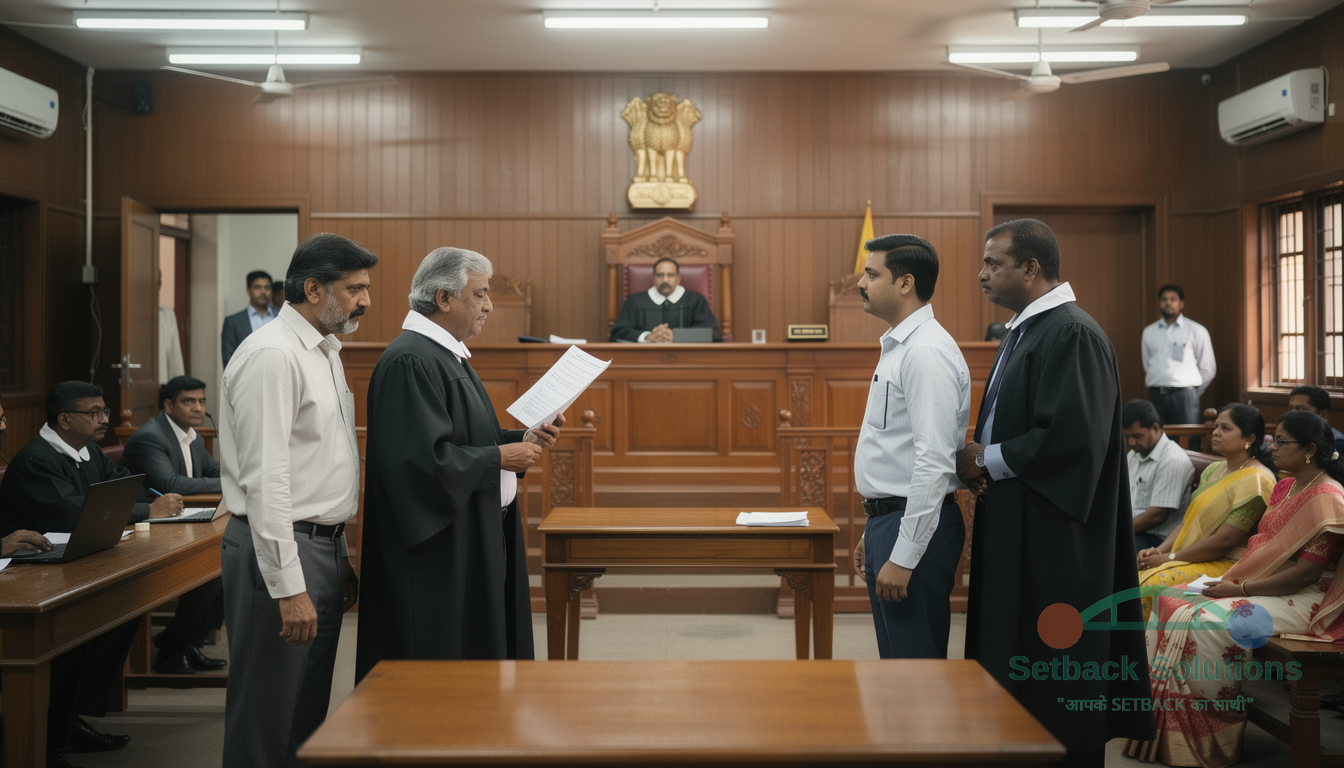
Appeal dismissed — ruling against Sathya Granites and others (Petitioners)
In Short
A business and its partners asked the court to order the State Bank of India to refund two and a half crore rupees they had deposited for a one-time loan settlement deal that did not work out. The High Court rejected their request, noting that since they still owed a massive amount of money on their loan, the bank was legally allowed to use that deposited money to cover part of the debt instead of giving it back.
The Parties
Party A: Sathya Granites, P.K.Pounraj, and P.Thilagavathi
Party B: State Bank of India
Advocates & Judges
For Party A: Learned Advocate Mr. R.Venkat Raman
For Party B: Learned Advocate Mr. M.L.Ganesh
Judge(s): Hon'ble Justice D.Bharatha Chakravarthy
What the Case Was About
A business firm and its partners had taken a massive loan from the State Bank of India and faced severe repayment troubles with dues crossing eighty crore rupees. Over time, they deposited two and a half crore rupees into a special bank account while trying to negotiate a one-time settlement to close the loan account. When those settlement talks failed and the deal fell through, the borrowers demanded that the bank return their deposit money. The bank refused to hand the cash back and instead used it to clear a portion of the huge outstanding debt, leading the frustrated borrowers to file a case in the High Court to force a refund.
Judgment Date
01.10.2026
The Outcome
The court dismissed the writ petition and ruled that the borrowers had no right to get their settlement deposit back. The judge held that the bank acted properly by adjusting the deposited funds toward the massive unpaid loan amount.
What the Court Looked At
- The petitioners deposited two and a half crore rupees on different dates while attempting a one-time settlement with the bank.
- The petitioners argued that because the money sat in a separate account and the settlement failed, the bank had to return it.
- The bank argued that a previous court order in a similar case already settled this exact issue against the same petitioners.
- The court noted that the deposit was not made with any written promise or condition that the bank would automatically refund it if the settlement failed.
- The court observed that when a borrower owes massive amounts of money, the bank can appropriate deposited settlement funds toward the total loan due.
"In the event of the OTS not going through, the deposit is not made conditional or on undertaking by the parties that it will be returned."
What This Means For You
This case teaches a harsh lesson about depositing money with a bank for a settlement offer when you still owe a massive debt. The borrowers assumed that putting settlement money into a temporary account meant they could easily take it back if the deal collapsed. Instead, because they left the deposit open-ended without a strict written agreement forcing a refund, the bank used the money to pay down their gigantic loan. If you are negotiating a settlement with a bank, never assume your deposit is safe from being swallowed up by your overall debt if the deal falls apart. Setback Solutions can help you understand your options and coordinate next steps when you are trapped in complex bank recovery disputes.
You Still Have Options
Dealing with massive bank loan recoveries, failed settlements, and unexpected asset adjustments can leave you feeling completely stuck and out of options. If you are facing a steep debt recovery battle, remember that it is not the end of the road and you can still explore alternative paths like getting a second opinion or reviewing your litigation strategy. You can reach out to Setback Solutions for help understanding your options and coordinating the next step. Please note that Setback Solutions is not a law firm, does not give legal advice, and never guarantees any specific outcome, but is always here to offer plain-language help and coordination.