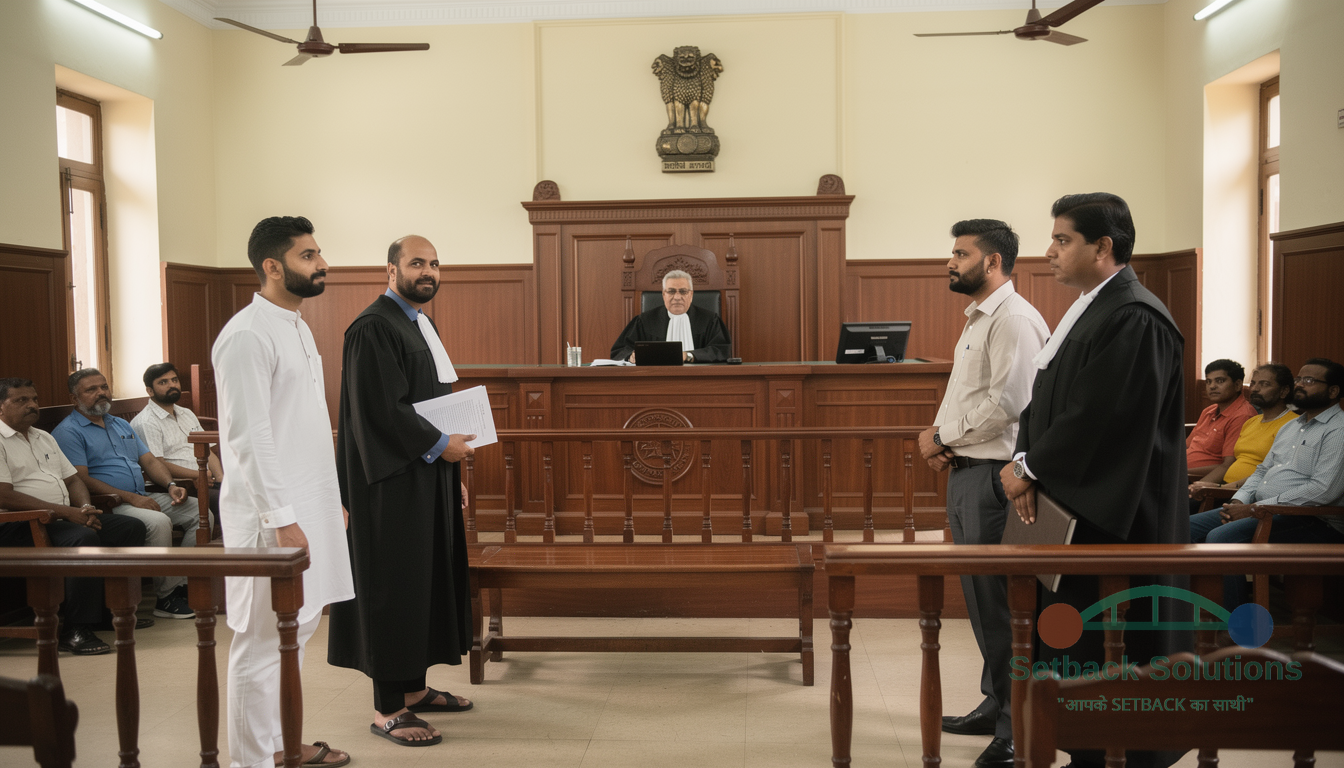
Appeal allowed in part — quashing the Atrocity Act charge against Tausif Ayub Mirza and others (Applicants)
In Short
A group of people faced criminal charges after a fight broke out on a road near a local dargah, including serious allegations under a special law protecting marginalized communities. The High Court examined the police charge-sheet and found that no independent witnesses were actually around to hear any caste-based insults. Because the law requires such incidents to happen strictly within "public view," the court dropped the special atrocity charge against the accused.
The Parties
Party A: Tausif Ayub Mirza & Ors. (Applicants / Accused)
Party B: State of Gujarat & Anr. (Respondents / Complainant)
Advocates & Judges
For Party A: Learned Advocate Mr. Vishal B. Vinchi (for Mr. Hardik H. Dave)
For Party B: Learned Advocate Mr. Rohan Shah (APP)
Judge(s): Hon'ble Justice P. M. Raval
What the Case Was About
In December 2015, a man was riding his motorcycle with his mother when he claimed he was stopped near a village leader's shop by a group of people. He alleged they hurled caste-based insults at him, beat him up, and warned him not to vote for a specific candidate or else their huts would be burned down. A police case was registered, and a charge-sheet was later filed against the accused for assault, threats, and under the Scheduled Castes and Scheduled Tribes (Prevention of Atrocities) Act. The accused later gave up challenging the basic assault charges and asked the High Court to throw out only the special atrocity charge.
Judgment Date
29/09/2026
The Outcome
The High Court allowed the application in part and quashed the criminal case regarding the special atrocity charge against the applicants, ruling that the basic legal requirements for that specific offense were not met.
What the Court Looked At
- The court noted that the applicants chose not to press their challenge against the basic assault and threat charges under the general penal code.
- It reviewed the special law requirement that an insult or intimidation must take place specifically in a place within "public view."
- The court observed that while the incident happened near a dargah, which is a public place, the police investigation papers showed no independent witnesses were present to hear the alleged caste-related remarks.
- It accepted the argument that a public place and public view are legally different things under this specific statute.
"Though alleged offence might have occurred in a public place but it was not within the public view and thus, ingredients of the offence alleged under the Atrocity are not satisfied."
What This Means For You
This case shows that precise legal definitions matter enormously when criminal charges are filed. The accused were saved from a severe special charge because the police paperwork failed to prove a vital ingredient: that independent members of the public actually witnessed the alleged remarks being made. If you or someone you know is facing criminal allegations where the legal requirements do not match the actual facts on the ground, do not panic and carefully review the police charge-sheet with a professional. Setback Solutions can help you understand your options and coordinate your next steps in plain language without any legal jargon.
You Still Have Options
If you are currently facing a false FIR or struggling with charges where the basic legal ingredients simply do not match what actually happened, it is not the end of the road. You can always explore getting a second opinion, reviewing your paperwork, or seeking non-judicial guidance on how to navigate the system. Reach out to Setback Solutions to get plain-language help and coordination as you figure out your next steps.